

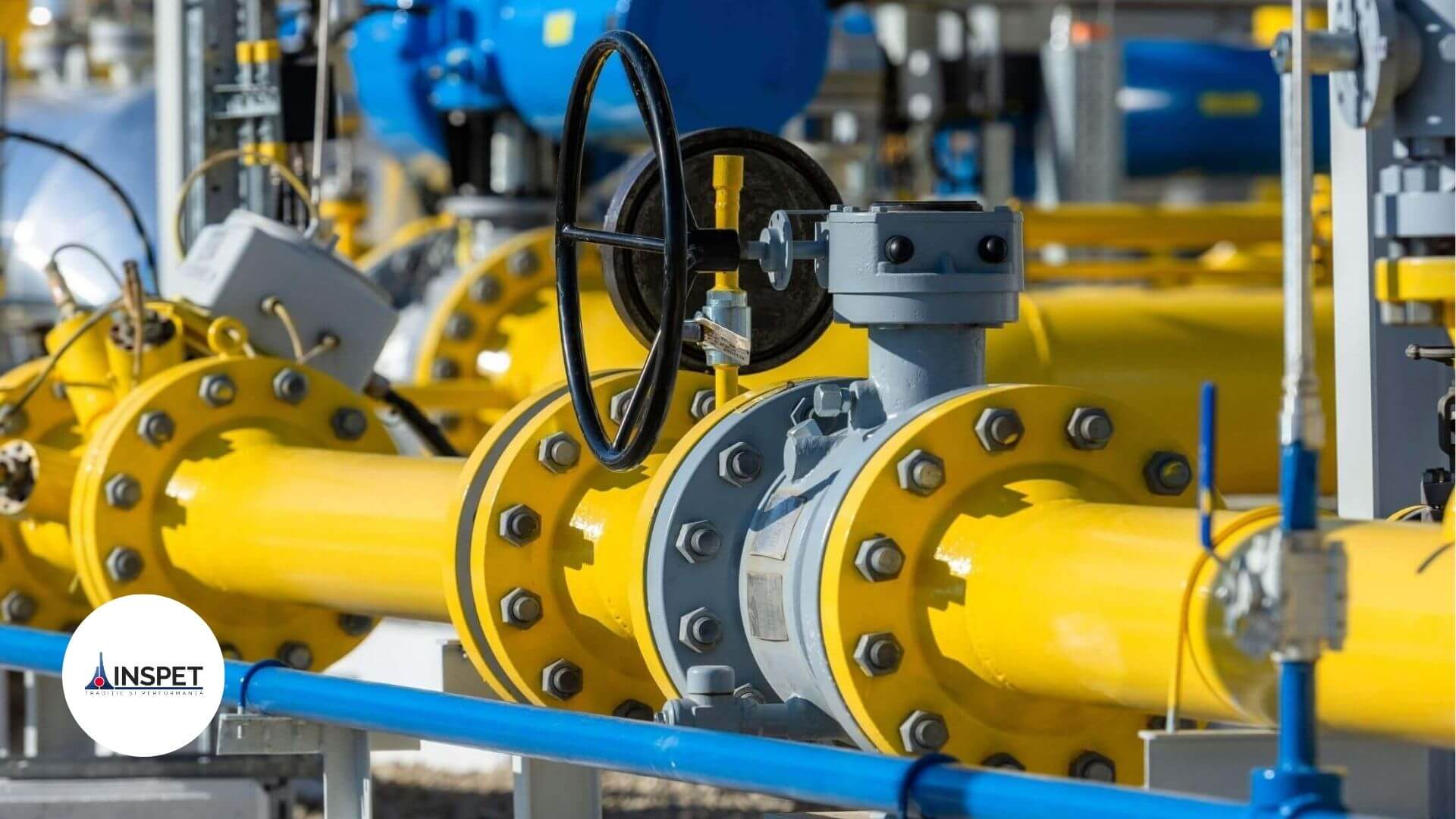
At INSPET, our activity is closely linked to the development of energy infrastructure. We operate in the field of utility projects for energy fluids — natural gas, crude oil, water and, in the near future, hydrogen — contributing to the development and modernization of energy systems that play a strategic role for the economy and for the region’s energy security.
In this context, we implement energy projects and critical infrastructure projects for the energy fluids sector, acting as an Energy Infrastructure Integrator under the EPCC model (Engineering, Procurement, Construction & Commissioning).
This role involves more than simply executing construction works. It requires the ability to integrate engineering, procurement, construction, operational management and commissioning into a single coherent project delivery process.
Two Complementary Roles in Project Implementation
Depending on the type and complexity of the project, we can undertake project implementation in two complementary ways.
On one hand, we act as a General Contractor, having the expertise and resources necessary to manage construction works in their entirety. In this role, we coordinate the entire process — from engineering and procurement to construction, testing and commissioning — integrating all technical and operational components of the project.
On the other hand, we can also operate as a Specialized Contractor, providing dedicated technical teams, equipment, machinery and the know-how required to deliver critical works associated with the transport and distribution of energy fluids.
This dual capability allows us the flexibility to participate in projects both as a consortium leader and as a specialized technical partner, depending on the structure and requirements of each investment.
Why We Believe in Partnerships
We are often asked why we place so much emphasis on partnerships, considering that we have the technical and operational capacity to implement complex projects independently.
The answer is simple: modern energy projects are becoming increasingly complex and interconnected.
Today’s energy infrastructure is no longer purely national. It is regional and European. Pipelines cross borders, energy systems are interconnected, and investments often involve international consortia, institutional financiers and infrastructure operators from multiple countries.
In this context, partnerships are not a limitation of a company’s capabilities. Rather, they represent a mature way of organizing complex projects. They allow different competencies to come together — engineering, technology, financing, project management and local expertise.
There is also another reason why we believe in partnerships. INSPET is a Romanian company, built over time through work, projects delivered in the field and collaborations that have grown organically. For this reason, we believe that when a company has experience, capacity and stability, it is natural to contribute to the development of other companies and to the broader ecosystem in which it operates.
Energy infrastructure projects, by their very nature, have a direct impact on economic development. They mean investment in regions, communities and the growth of entire areas. Over time, the reality of the projects we work on has become an organizational value. We have learned that development is not an individual process, but a collective one.
Partnerships also mean taking responsibility for contributing to a healthy industrial ecosystem, capable of supporting complex energy projects in Romania and across Europe. In many ways, this reflects the nature of our activity: what we build physically — energy infrastructure — represents development. And over time, this idea has also shaped the way we think as an organization: when you have the capacity to build, you also have the responsibility to support development.
Our Role in Consortia and Partnerships
In many of the projects we participate in, INSPET acts as consortium leader or main contractor. This role involves technical and operational coordination of the project and the integration of partners’ contributions.
Leadership in such projects does not mean concentrating all activities within a single company. It means having the ability to create an effective collaboration structure, where each partner contributes its expertise.
In EPCC projects, this coordination is essential to ensure technical consistency, resource optimization, compliance with project schedules and adherence to international standards.
Experience in Complex Energy Infrastructure Projects
Throughout our activity, we have worked on a wide range of projects in the energy and industrial infrastructure sectors, including:
- construction of main trunk pipelines for natural gas, crude oil and petroleum products
- gas drying, regulation and metering stations
- gas compression stations and storage facilities
- water transmission pipelines and distribution networks
- sewer networks and irrigation systems
- high-density polyethylene pipelines for natural gas and potable water distribution
- surface installations for oil and gas fields
- metal structures and industrial fabrication
- industrial constructions — factories, refineries, warehouses and industrial halls
- civil constructions — office buildings, residential developments and heritage projects
In total, we have built over 4,000 km of pipelines for the transport of natural gas, oil and water, projects that today form part of the energy infrastructure of Romania and the wider region. This experience has shown us that critical infrastructure projects are always the result of strong collaboration between companies, engineers, authorities and financial institutions.
BRUA – A European Project Built Through Collaboration
A clear example of how modern energy infrastructure is developed through partnerships is the BRUA corridor, “The Development of the Romanian Gas Transmission System along Bulgaria – Romania – Hungary – Austria Route” (2018 – 2020).
This strategic project is part of the European energy infrastructure and aims to facilitate natural gas transport between markets in Central and South-Eastern Europe.
Within this project, INSPET was involved in the construction of key components, including:
- Podișor, Bibești and Jupa compression stations
- BRUA transmission pipeline – Lot 1, DN800, approximately 180 km
- BRUA transmission pipeline – Lot 2, DN800, approximately 50 km
BRUA clearly illustrates that modern energy infrastructure is no longer purely national. It is regional and European, and implementing such investments requires collaboration between infrastructure operators, contractors, engineers, institutions and financiers across multiple countries.
Energy Infrastructure Connects Regions
Beyond BRUA, we have also participated in other projects that contribute to the development of regional energy infrastructure, such as:
- the Romania – Hungary interconnection (Arad – Nădlac – Szeged)
- the Romania – Republic of Moldova interconnection (Iași – Ungheni)
- the Romania – Bulgaria interconnection (Giurgiu – Ruse), including the crossing of the Danube River
- the Jitaru – Ghercești natural gas transmission pipeline, approximately 180 km in length
These projects are part of an energy network that connects markets and contributes to regional energy security. For us, each such project confirms that energy infrastructure is, by its nature, a collective effort.
An Ecosystem Built Around Collaboration
Our activity is also connected to a broader professional ecosystem. INSPET is affiliated with organizations and chambers of commerce such as the Prahova Chamber of Commerce and Industry, the Romanian Chamber of Commerce and Industry, the American Chamber of Commerce in Romania (AmCham), the French Chamber of Commerce, Industry and Agriculture in Romania (CCIFER), the Polish-Romanian Bilateral Chamber of Commerce, the Romania-Ukraine Bilateral Chamber of Commerce, PSC – Employers’ Association of Construction Companies, the European Clean Hydrogen Alliance, ARACO – Romanian Association of Construction Entrepreneurs, the Romanian Water Association and other professional organizations.
These networks create spaces for dialogue between companies, investors and institutions and facilitate the development of joint projects in Romania and across Europe.
Why We Believe in Expansion Through Partnerships
In recent years, many energy projects have become increasingly complex and international. Investors, infrastructure operators and industrial developers are increasingly looking for local or regional partners capable of implementing complex infrastructure projects.
Our role in such projects is often that of implementation partner or consortium leader, capable of coordinating complex works and integrating the necessary technical expertise.
For us, geographic expansion does not simply mean entering new markets. It means the opportunity to build energy infrastructure together with international partners, in projects that have a real impact on the economic and energy development of regions.
”In energy infrastructure, every project becomes part of a system that must operate safely for decades. That is why we believe that major energy projects are, at their core, the result of collaboration between organizations that combine their experience, resources and professional responsibility.
For us, partnerships represent trust, professional maturity and the ability to build energy infrastructure to the standards required by strategic projects.”

Become part of the INSPET community and explore the projects, values and people that define our work and our long-term contribution to energy and critical infrastructure.
Follow us on our official channels: LinkedIn, Facebook, YouTube and on the company website, www.inspet.ro.
