

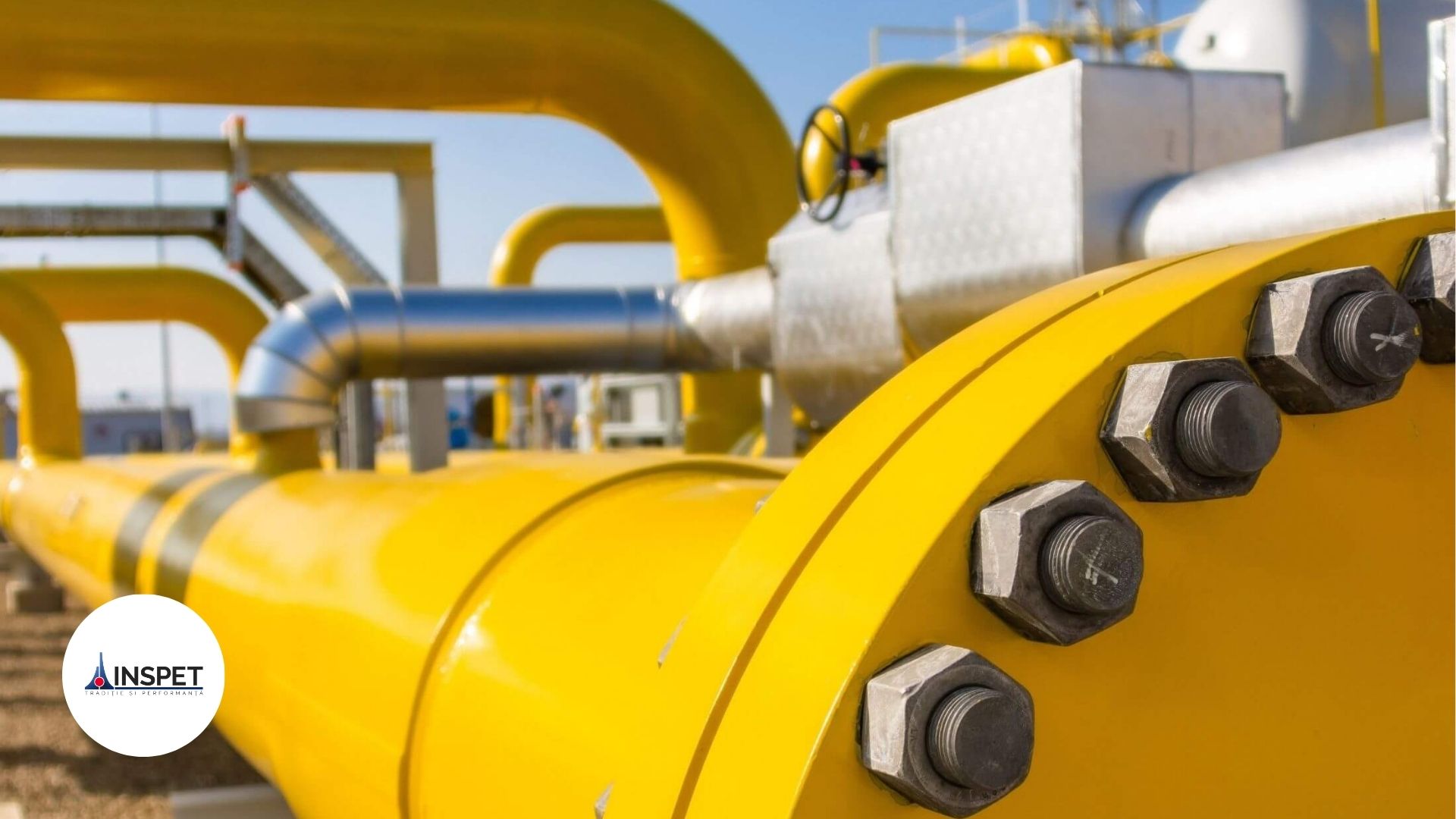
In recent years, energy fluid infrastructure in Europe has entered a phase of accelerated transformation, driven both by changes in the energy sector and by economic and environmental pressures. While in the past infrastructure development was primarily focused on natural gas transportation, today the direction is far more complex and integrated. Systems are no longer designed exclusively for a single type of fluid, but are becoming increasingly flexible, capable of transporting, managing and integrating natural gas, petroleum products, water and, in the future, hydrogen.
One of the most notable trends across Europe is the transformation of existing infrastructure. Rather than focusing solely on building entirely new networks, a significant share of investments is directed toward upgrading and repurposing existing pipelines. This approach is especially evident in the development of hydrogen infrastructure, where a large part of future networks will rely on converting current natural gas pipelines. While this strategy helps reduce costs and accelerate deployment, it also requires advanced technical capabilities and specialized expertise in the rehabilitation and adaptation of existing systems.
At the same time, energy security has become a major priority for European states. Recent events have accelerated investments in the interconnection of national systems and in the development of regional energy corridors. Infrastructure is no longer viewed as a local system, but as part of an integrated European network, where energy flows must be flexible and bidirectional. This translates into complex projects carried out through cross-border collaboration, as well as increased requirements for technical and operational standards.
Meanwhile, the technologies used in infrastructure construction are evolving rapidly. Low-impact construction methods, such as horizontal directional drilling (HDD), are becoming standard in modern projects. The ability to execute works without major surface disruption, without interrupting traffic or affecting existing activities, is no longer a competitive advantage but an implicit requirement in most oil, gas and water infrastructure projects.
Another defining element of this period is the digitalization of critical infrastructure. Modern systems are no longer purely physical, but include advanced digital components that enable real-time monitoring, operational optimization and incident prevention. The integration of automation and control systems has become essential for managing increasingly complex and interconnected networks.
At the same time, the development of energy fluid infrastructure is influenced by growing pressure to reduce environmental impact. Projects must comply with strict standards, and technical solutions are evaluated not only in terms of efficiency, but also sustainability. This shift drives a move toward less invasive technologies and solutions that minimize environmental and community impact.
A less visible, but highly important aspect, is the increasing integration of water infrastructure into energy projects. In industrial and regional contexts, water and energy systems are becoming more interconnected, and modern projects often include mixed components serving multiple utilities simultaneously. This trend favors companies with multi-fluid infrastructure experience, capable of managing complex projects beyond narrowly defined specializations.
All these trends lead to a clear conclusion: energy fluid infrastructure in Europe is becoming more integrated, more flexible and more technologically advanced. In this context, the role of contractors is changing. Execution capability alone is no longer sufficient—what becomes essential is the ability to integrate systems, adapt solutions and deliver complex projects in a continuously evolving environment.
The Role of EPCC Contractors in the New Energy Infrastructure Context
In this phase of transformation, EPCC contractors (Engineering, Procurement, Construction and Commissioning), such as INSPET, are becoming key players in the development of energy fluid infrastructure in Europe. The complexity of projects, the integration of multiple infrastructure types and the increasing technical requirements demand an integrated approach, where a single contractor is responsible for the entire project lifecycle.
This model allows for better coordination between design, procurement, construction and commissioning stages, reducing risks and ensuring technical consistency. In a field where infrastructure must operate safely for decades, integration capability becomes just as important as execution itself.
INSPET – EPCC Experience in Energy Fluid Infrastructure
In this context, INSPET has established itself as an EPCC contractor specialized in energy fluid infrastructure, with relevant experience in natural gas, crude oil and water projects, both in Romania and across the region.
With over 35 years of activity, the company has contributed to the development of more than 4,000 km of pipelines and over 350 infrastructure projects, covering a wide range of works: transmission pipelines, compressor stations, technological installations, water and wastewater infrastructure and complex industrial projects.
INSPET’s experience includes strategic projects such as the development of infrastructure within the BRUA corridor, the execution of compressor stations and gas transmission pipelines, as well as regional water and wastewater infrastructure projects. At the same time, INSPET has expertise in horizontal directional drilling (HDD), used for complex crossings without impacting existing infrastructure or the environment:
- Sub-crossing of the Danube River with two 500 mm diameter gas pipelines in the Giurgiu–Ruse area, part of the interconnection of Romanian and Bulgarian gas transmission systems
- Sub-crossing of the Prut River and sections of the interconnection between Romanian and Moldovan gas transmission systems; the 500 mm diameter pipeline from Iași to Ungheni
- Isaccea–Negru Vodă gas pipeline (1,200 mm diameter), used for the transit of natural gas from Russia via Ukraine to Bulgaria, Turkey and Greece, crossing Dobrogea from north to south
Through its ability to manage EPCC projects and its own fleet of equipment and industrial facilities, INSPET delivers integrated solutions—from engineering to commissioning. Below are just a few examples of projects where INSPET acted as General Contractor and/or Specialized Contractor:
Execution of the STC PODIȘOR, STC BIBEȘTI and STC JUPA compressor stations within the project “Development on the Romanian territory of the Bulgaria–Romania–Hungary–Austria (BRUA) gas transmission corridor”
Execution of Lot 1 (km 0–180) and sections of Lot 2 of the pipeline within the project “Development on the Romanian territory of the Bulgaria–Romania–Hungary–Austria (BRUA) gas transmission corridor”
Execution of the Onești and Gherăești compressor stations, including pipeline automation and security systems, within the project “Development of the National Gas Transmission System in the North-East of Romania, aimed at improving gas supply in the region and ensuring transport capacity towards the Republic of Moldova”
The Jitaru–Ghercești natural gas transmission pipeline project, located in Dolj and Olt counties, is a project of national importance aimed at expanding the storage, injection and extraction capacity of natural gas within the underground storage facility at Ghercești. The pipeline will have an approximate length of 90 km and will contribute to the modernization of energy infrastructure and to increasing the security of natural gas supply at both regional and national levels.
Expansion of water supply and sewerage networks in Dragomirești, Mănești and Tătărani, Dâmbovița County (rehabilitation of over 13 km of water supply network, expansion of 100 km of sewerage network, construction of over 50 wastewater pumping stations)
Design and execution of potable water supply pipelines, conventionally clean wastewater discharge network from the Chișcani Water Treatment Plant (STAP), and raw water supply pipeline from the intake to STAP Chișcani – Brăila administrative unit, a project that is part of the “Regional project for the development of water and wastewater infrastructure in Brăila County”
Design and execution of intelligent natural gas distribution infrastructure and connection of households and public non-household consumers in the communes of Tomești, Cârța, Dănești, Mădăraș, as well as the extension and modernization of the existing network in Sândominic (in association with the administrative territorial units within ADI Felcsik–Ciucul de Sus). An integrated project funded through POIM: over 85 km of pipelines, 2 pressure regulation and metering stations (SRMP) and 4,000 connections
Execution of the project “Development of intelligent gas distribution systems in Rășinari commune”, a record at the level of all communes in Sibiu County in terms of funding value for such an energy infrastructure project: 28 km of underground natural gas pipelines and over 1,850 connections
Systematization of gas suction/discharge manifolds for the Butimanu–Bilciurești compressor station – interconnection manifold within the Butimanu compressor station, a project carried out under the supervision of SNGN ROMGAZ S.A. – DEPOGAZ Ploiești Natural Gas Storage Subsidiary, a leading company holding approximately 90% of Romania’s total active gas storage capacity. The implementation of this project increases daily gas extraction and injection capacity at the Bilciurești storage facility.
Execution of the project “Surface technological installations for well 306 Nadeș, Mureș County”, with SNGN ROMGAZ S.A. Mediaș as beneficiary – a project driven by the need to exploit gas resources identified through geological drilling, involving the design of surface installations and connection to an existing well group in the area
Execution of the project “Surface technological installations for wells 1 Herla and 1 Drăceni, Suceava County”, aimed at collecting gas into a group located between the two wells and transporting it to a gas drying station, where the required quality standards imposed by ANRE can be achieved
As Europe continues to redefine its energy systems, energy fluid infrastructure becomes a central element of this transformation. The integration of multiple fluid types, digitalization, environmental impact reduction and the development of cross-border projects are shaping an increasingly complex industry.
In this context, companies capable of delivering integrated, adaptable and efficient projects will play a crucial role. Infrastructure is no longer just about pipelines or installations—it is about systems that connect economies, support industries and ensure long-term stability.

INSPET is a Romanian company with over 75 years of technical tradition, positioned as an Energy Infrastructure Integrator (EPCC), specializing in strategic energy projects and in the development of integrated systems for the transport and processing of natural gas, crude oil, and water, including main pipelines, technological installations, and highly complex industrial energy facilities.
Become part of the INSPET community and explore the projects, values and people that define our work and our long-term contribution to energy and critical infrastructure.
Follow us on our official channels: LinkedIn, Facebook, YouTube and on the company website, www.inspet.ro.
