

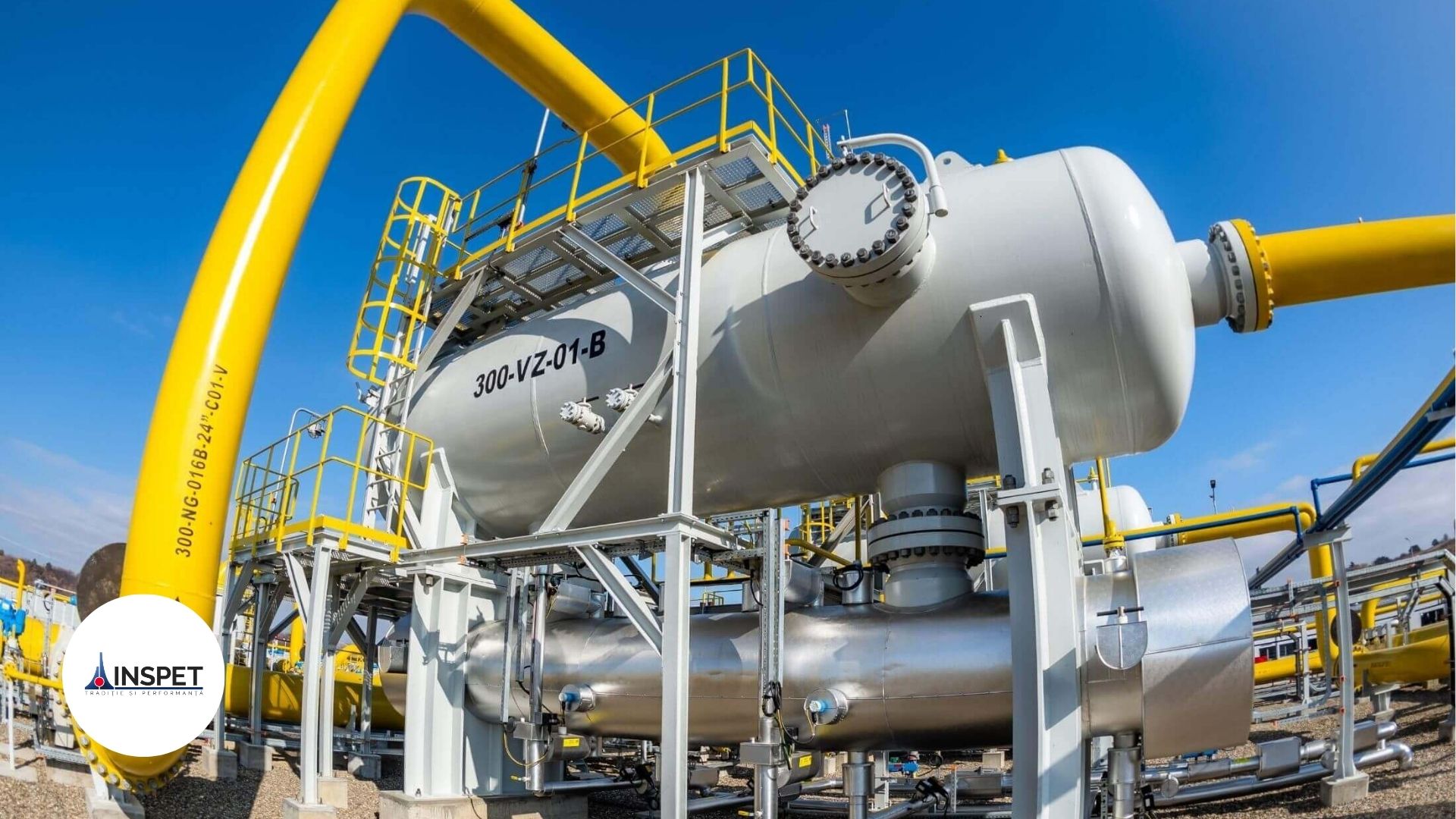
Energy infrastructure is one of those invisible realities that sustain everyday life. Natural gas reaches homes, industries, and power plants through a complex network of pipelines, compressor stations, technological installations, and underground storage facilities. Behind this system lie highly complex projects and teams of specialists who transform engineering plans into real infrastructure. Here is about the energy infrastructure in Romania.
For us at INSPET, these projects represent more than industrial works. They are part of a continuous effort to develop and modernize energy infrastructure, contributing to Romania’s energy security and to the interconnection of regional energy systems. This time, we chose to present two representative projects – the Onești-M Natural Gas Compressor Station and the Bilciurești Natural Gas Drying Station – two projects that illustrate how the energy system actually works: through the transport, processing, and storage of natural gas.
When we talk about energy infrastructure, we are actually talking about systems that support the functioning of the economy and the everyday life of communities. Natural gas transmission pipelines, compressor stations, and technological installations are parts of a complex mechanism that connects regions, industries, and energy markets. Behind these projects there are not only technical designs and industrial installations. There are people, teams, and years of experience accumulated in the field.
At INSPET, we have been working on such projects for more than 35 years, and we know that energy infrastructure is not built only with equipment and technologies, but also with responsibility and professionalism. As we often say within the company:
“In energy infrastructure, every project we build becomes part of a system that must operate safely for decades. That is why every detail matters – from design and execution to the way our teams work together in the field.”
Compressor Stations – The Heart of Natural Gas Transmission Systems. Energy Infrastructure in Romania.
The long-distance transport of natural gas would not be possible without compressor stations. These technological installations maintain the pressure of gas within pipelines and allow it to be transported over hundreds of kilometers.
One representative project for us is the Onești-M Natural Gas Compressor Station, built in Bacău County, Romania.
The project included the construction of two twin natural gas compressor stations, located in Onești and Gherăești, as well as the automation and security systems for the natural gas transmission pipeline along the Onești – Gherăești – Lețcani route.
Within this project, several important components of the national natural gas transmission system were developed:
- the Onești – Gherăești natural gas transmission pipeline, with a length of 104 km
- the Gherăești – Lețcani natural gas transmission pipeline, with a length of 65 km
- the Onești-M Natural Gas Compressor Station
- the Gherăești Natural Gas Compressor Station
- automation and security systems for the transmission pipeline
Approximately 150 meters from the existing Onești Compressor Station, a new installation called SCG Onești-M was constructed. In front of the station, a pipeline pig launcher station was installed to serve the Onești – Gherăești pipeline.
The two compressor stations ensure the pressure required for transporting natural gas to consumption areas in the eastern part of Romania and towards the Republic of Moldova. The stations are located in the outskirts of Onești city (Bacău County) and Gherăești commune (Neamț County), Romania.
The new Onești-M Compressor Station is directly connected to the existing station, taking over gas transported through TRANSGAZ pipelines from the Siliștea area (southeastern Romania) and Seleuș area (central Romania) and directing it towards northeastern Romania and the Republic of Moldova.
Through this project, the objective was to increase Romania’s energy security and strengthen regional energy interconnections.
Technical Complexity of the Onești-M Compressor Station
The Onești-M compressor station is one of the most recent projects completed by INSPET teams, with the company acting as Leader of the Consortium responsible for implementation.
The execution of the installations involved significant technical resources:
- more than 11,300 meters of steel pipe, with diameters between 1/2” and 32”
- more than 23 tons of welding materials
- more than 240 tons of steel structures
- more than 320 tons of reinforcing steel for foundations
- over 120,000 linear meters of energy cables
The station is equipped with two CENTAUR Solar Turbines compressor units, each with a capacity of 4.6 MW, one operating and one serving as backup. The system allows bidirectional gas flow. The maximum transport capacity is 560,000 Sm³/h, while the advanced automation system allows the station to operate with only two operators per shift.
The execution and commissioning of the Onești-M Natural Gas Compressor Station represent an important reference project in INSPET’s portfolio. The project is part of a broader European infrastructure program co-financed by the European Regional Development Fund, implemented between 2021 and 2023.
The completion of this project contributed to strengthening Romania’s energy security, increasing natural gas supply to the North-Eastern region of the country, and supporting gas transport towards the Republic of Moldova.
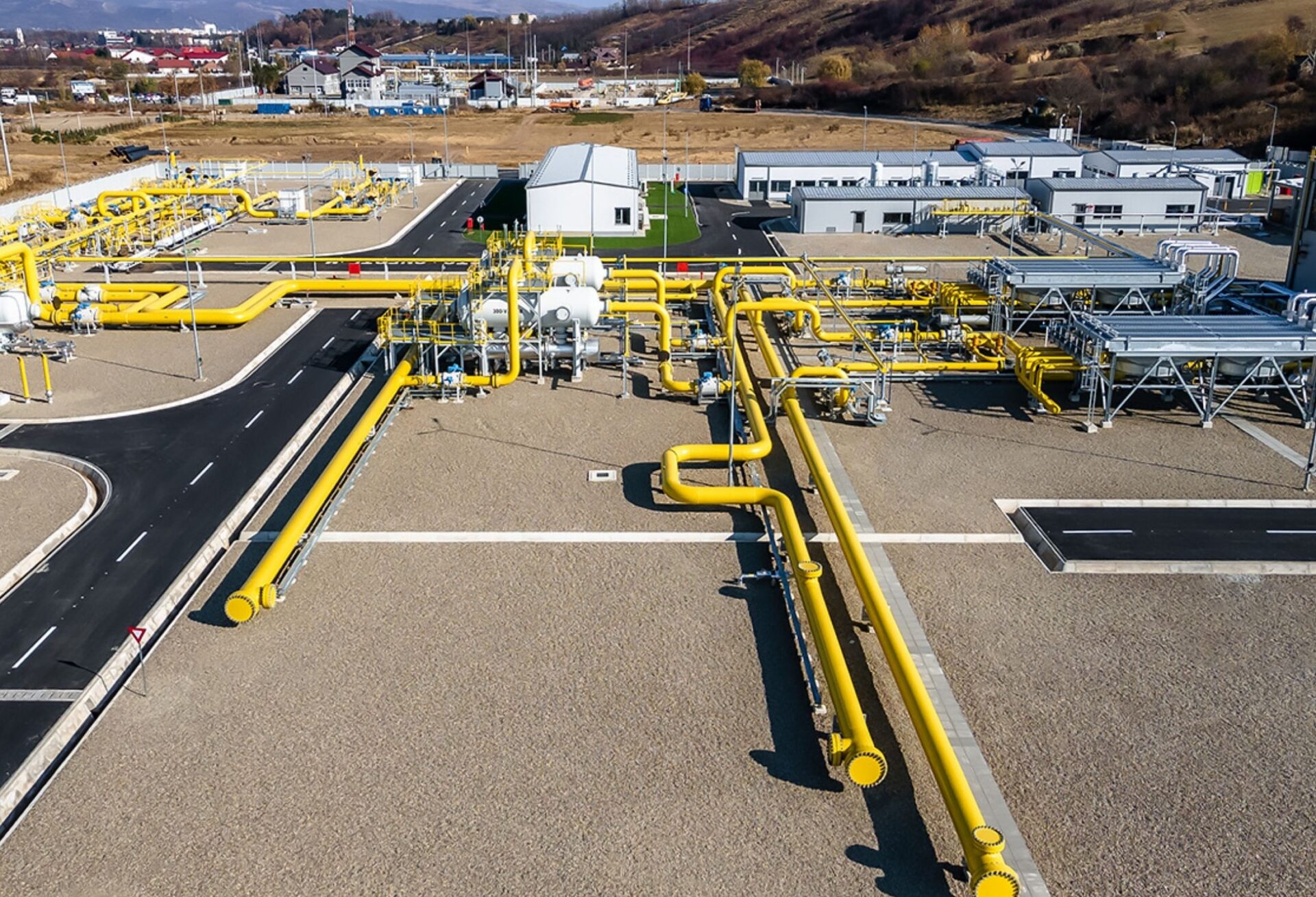


However, in energy infrastructure, the transport of natural gas is only one part of the system. For the entire mechanism to function reliably, gas must not only be transported, but also stored and managed efficiently according to fluctuations in consumption.
We chose to talk about these two projects – the Onești-M Natural Gas Compressor Station and the Bilciurești Natural Gas Drying Station – because they illustrate two essential components of modern energy infrastructure. The first is related to natural gas transmission, where compressor stations maintain the pressure required for gas to travel long distances through transmission pipelines. The second concerns natural gas storage, a strategic process that allows supply to be balanced and ensures availability during periods of high demand. Together, these projects show how the energy system works in practice: gas must be transported, processed, stored, and then safely distributed to consumption areas.
The Bilciurești Storage Facility – A Key Project for Romania’s Natural Gas Storage System
Another important project carried out by our teams is the Bilciurești Natural Gas Drying Station – Group No. 145, located in Dâmbovița County, Romania. In the quiet landscape of Bilciurești, technology and nature meet in a discreet way, yet with an essential role for Romania’s energy infrastructure. The station is part of the surface installations of the largest underground natural gas storage facility in Romania, operated by Depogaz.
Through the modernization of this installation, the system’s capacity was increased threefold, and today the station contributes to approximately 44% of Romania’s total natural gas storage volume.
The Bilciurești storage facility is ranked among the top 30 largest natural gas storage facilities in Europe and can supply approximately 20% of Romania’s daily natural gas demand during winter periods.
The main characteristics of the installation include:
- active storage capacity: 1,310 million Sm³
- maximum operating pressure: 45 bar
- daily extraction capacity: 5 million Sm³
The new gas drying station replaced three older installations, significantly reducing energy consumption and carbon dioxide emissions.
The total investment for the Bilciurești Natural Gas Drying Station – Group 145 was EUR 7.6 million, financed by S.N.G.N. ROMGAZ S.A. as part of a broader program for modernizing Romania’s energy infrastructure.
The project is part of the North–South Gas Interconnections in Central Eastern and South Eastern Europe (NSI East Gas) Priority Corridor and is included in the European Union’s list of Projects of Common Interest.


Recognition of Quality in Complex Projects
For the execution of the two projects – the Onești-M Natural Gas Compressor Station and the Bilciurești Natural Gas Drying Station – Group 145 – INSPET was awarded the ARACO Quality Trophy 2024.
This award is one of the most prestigious distinctions in Romania’s construction industry and is granted annually by the Romanian Association of Construction Entrepreneurs (ARACO) to projects that demonstrate technical excellence, performance, and durability. In 2024, ARACO recognized 11 companies for 16 highly complex projects, during a ceremony held in Cluj-Napoca.
Energy Infrastructure Is Built Over Time
Throughout our activity, we have participated in the development of numerous projects that today form part of Romania’s energy infrastructure.
The company’s experience can be summarized through several key milestones:
- over 4,000 km of pipelines for the transportation of natural gas, oil, and water
- 350+ strategic projects in energy infrastructure and installations for energy fluids
- more than 10 million inches of successfully tested welds
- over 60 million working hours in complex critical infrastructure projects
These figures tell only part of the story. The other part is represented by the people who worked on these projects – engineers, welders, technicians, and specialists who transformed technical designs into real infrastructure.
Infrastructure Built by People
Energy projects are often viewed through the scale of their industrial dimension. In reality, they are built by people. For us at INSPET, every project represents a real responsibility. Our organizational culture is reflected in the way we work on projects and in how we develop our teams. Because energy infrastructure is not only about industrial installations – it is about economic stability, energy security, and the development of entire regions.

Become part of the INSPET community and explore the projects, values and people that define our work and our long-term contribution to energy and critical infrastructure.
Follow us on our official channels: LinkedIn, Facebook, YouTube and on the company website, www.inspet.ro.
16 March, 2026
