

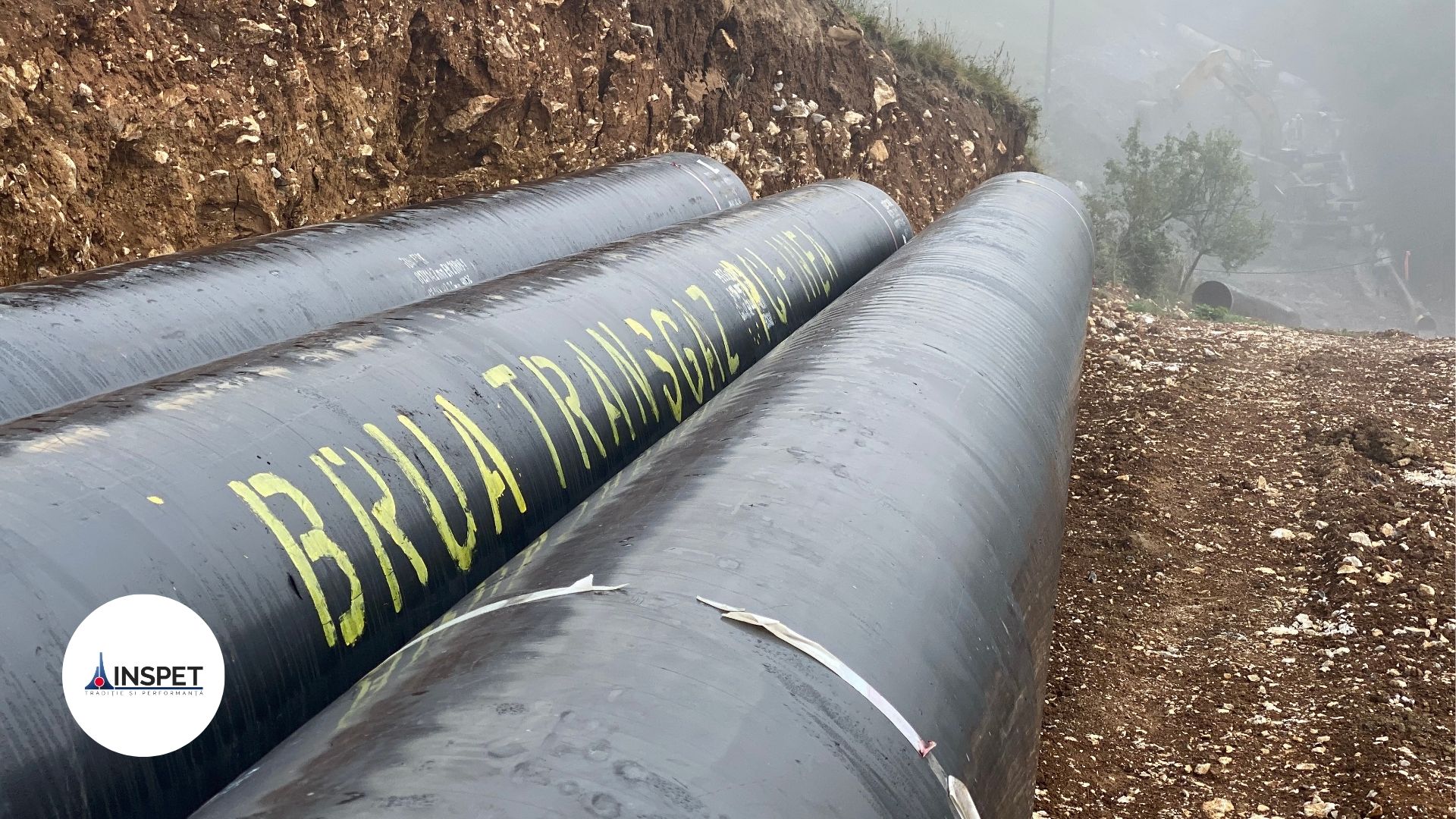
When discussing a country’s Gross Domestic Product (GDP), our attention naturally turns to industry, investment, consumption, or exports. Far less frequently do we think about infrastructure. Yet, one of the most important drivers of economic development is the infrastructure that enables industries to operate. Highways move goods, railways connect regions, ports facilitate trade, and energy infrastructure makes all these activities possible. Without reliable energy delivered where it is needed, factories cannot operate, industrial facilities cannot produce, and private investment becomes far less attractive.
From this perspective, a natural gas transmission pipeline is far more than a construction project. It is an investment that creates the conditions necessary for economic growth. The value of a pipeline cannot be measured solely by the number of kilometres built or the volume of natural gas it transports. Its true value lies in the investments it enables, the jobs it supports, and the competitiveness it brings to industry.
Infrastructure Does Not Directly Generate GDP, but It Makes GDP Growth Possible
Economics is based on a simple principle: infrastructure does not create value by itself, it creates value through the economic activity it enables. A natural gas pipeline does not manufacture products or provide services, but it allows industries that directly contribute to GDP to operate efficiently.
The same principle applies to highways. A motorway does not produce cars, furniture, or food products, yet without it, logistics costs increase, investment declines, and economic growth slows. The energy sector works in exactly the same way. A modern natural gas transmission network provides supply security, operational flexibility, and reliable access to energy resources – all essential conditions for industrial investment and long-term economic development.
For this reason, economists consider investments in critical infrastructure among the most effective long-term public investments. Their benefits are rarely reflected immediately in economic statistics, but over time they translate into higher investment levels, improved productivity, stronger industrial competitiveness, and sustainable economic growth.
Romania: When Energy Infrastructure Becomes Economic Infrastructure
Over the past decade, Romania has delivered some of the country’s most significant energy infrastructure projects. The expansion of the National Gas Transmission System, the development of the BRUA Corridor, the construction of new natural gas compressor stations, and the investments associated with the Black Sea offshore developments have gradually reshaped Romania’s position on Europe’s energy map.
At first glance, these projects appear to serve only the energy sector. In reality, their economic impact extends far beyond it. A modern gas transmission infrastructure enables new industrial consumers to connect to the network, supports private investment, and increases Romania’s attractiveness for companies considering the establishment of new manufacturing facilities. In other words, energy infrastructure has become a key driver of economic competitiveness.
Romania’s economy has experienced one of the fastest convergence rates within the European Union. When the country joined the EU in 2007, its GDP per capita stood at approximately 44% of the EU average. By 2024, this figure had increased to nearly 78% of the European average. This remarkable progress has been driven by sustained investment, the expansion of the private sector, and Romania’s growing integration into European markets.
Throughout this transformation, infrastructure has played a fundamental role. While public attention has often focused on highways and railways, energy infrastructure has been one of the essential foundations supporting industrial development, attracting investment, and strengthening Romania’s economic competitiveness.
BRUA: An Investment with an Impact Beyond the Energy Sector
Few projects illustrate this principle better than the BRUA Gas Corridor. It is most often described as a natural gas transmission project connecting Bulgaria, Romania, Hungary, and Austria. In reality, however, its strategic significance extends far beyond gas transportation.
By developing this corridor, Romania has strengthened its integration into the European natural gas market while diversifying its transmission routes. At the same time, BRUA provides the infrastructure required to monetize the country’s Black Sea natural gas resources and creates the conditions for new industrial investments.
Perhaps even more importantly, BRUA reduces the risks associated with dependence on a single supply route and provides the Romanian economy with greater flexibility and resilience. For investors, this level of predictability is nearly as important as the cost of energy itself.
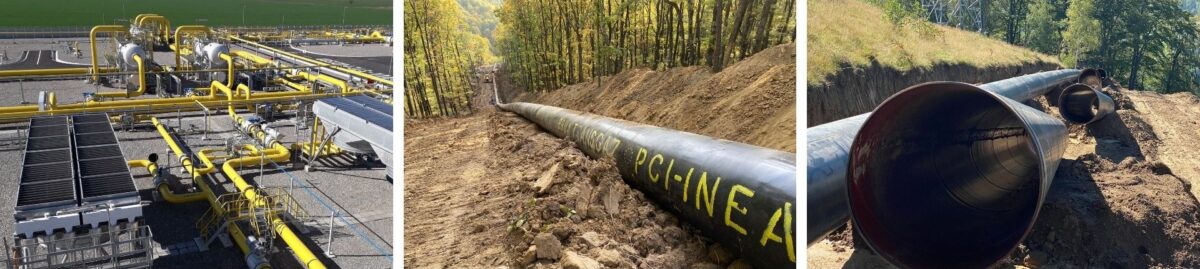
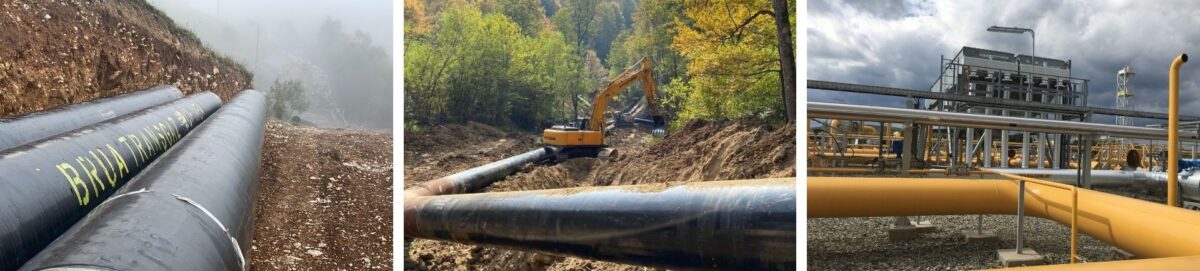
The first phase of the BRUA pipeline represented an investment of approximately EUR 423 million, including the construction of more than 470 kilometres of high-pressure transmission pipeline and three state-of-the-art natural gas compressor stations. Beyond the scale of the investment, the project established the infrastructure necessary to integrate Romania into the regional gas market while preparing the country for the future development of its Black Sea gas resources.
The economic value of BRUA is therefore measured not only by the volumes of gas it can transport, but also by its ability to remove barriers to industrial investment, improve the flexibility of Romania’s National Gas Transmission System, and strengthen the country’s long-term economic competitiveness.
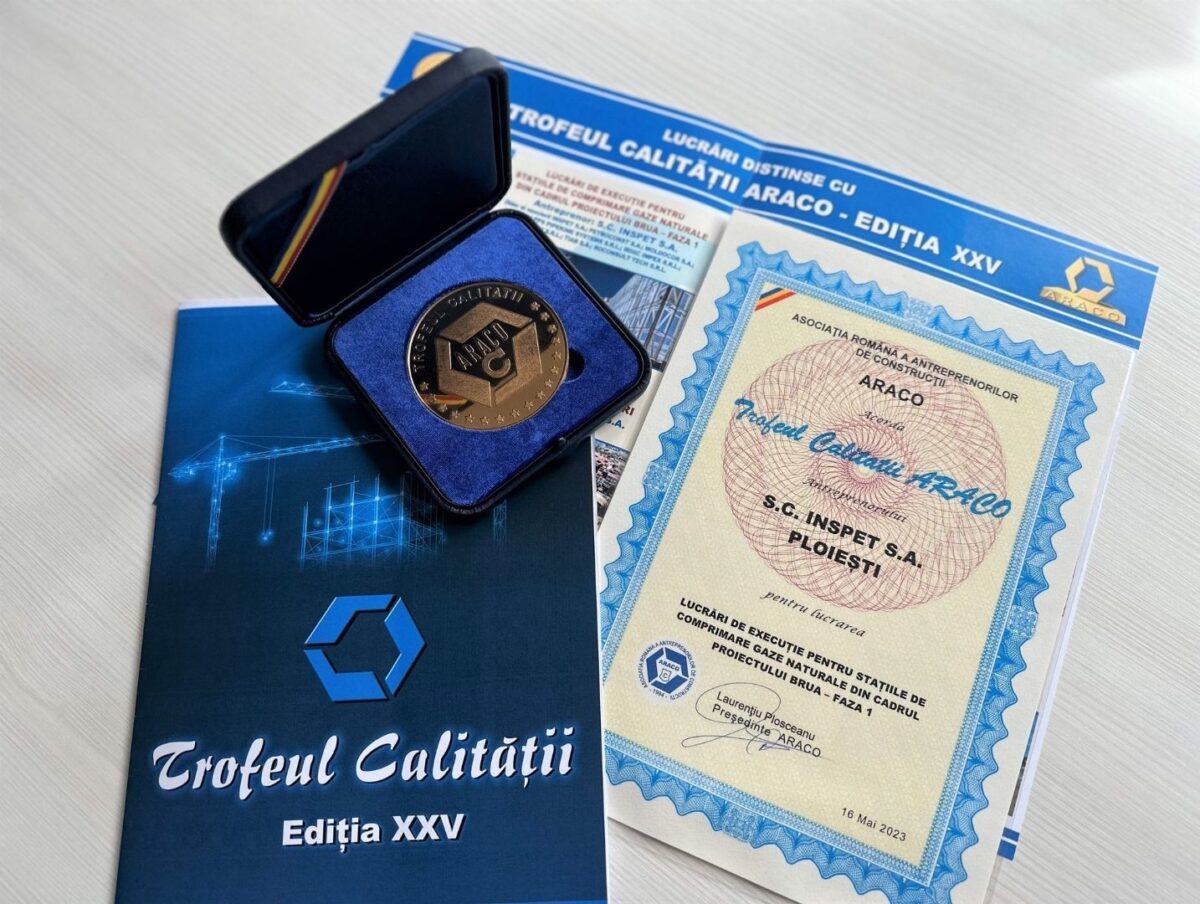
“Major energy infrastructure projects represent far more than kilometres of pipelines or technological installations. They are long-term investments that strengthen a country’s economic competitiveness and energy security. INSPET has had the privilege of contributing, through the EPCC (Engineering, Procurement, Construction and Commissioning) delivery model, to some of Romania’s most important strategic energy projects of recent decades. The company executed Lot 1 (km 0–180) and an additional 31 kilometres of Lot 2 of the DN800 PN63 high-pressure transmission pipeline within the BRUA Gas Corridor, the largest investment project in the history of Romania’s natural gas transmission industry. Furthermore, as General Contractor and leader of the construction consortium, INSPET successfully delivered the Podișor, Bibești and Jupa Natural Gas Compressor Stations – critical infrastructure that significantly increased Romania’s bidirectional gas transmission capacity and further integrated the country into the European energy market. In recognition of the quality of its execution, the project ‘Construction Works for the Natural Gas Compressor Stations within the BRUA Project – Phase I’ was awarded the ARACO Quality Trophy, acknowledging both the technical excellence of the project and the Romanian construction industry’s capability to deliver strategic infrastructure at the highest international standards.”
Neptun Deep: The Clearest Example of the Link Between Infrastructure and GDP
The discovery of significant natural gas reserves is only the first step. Resources located underground or offshore generate no economic value until they can be extracted, processed, transported, and delivered to consumers.
The Neptun Deep project is a compelling example of this principle. Official estimates indicate that the project has the potential to generate tens of billions of euros for Romania’s economy over its operational lifetime, while also delivering substantial revenues to the state budget. However, these benefits depend entirely on the existence of the infrastructure required to integrate offshore production into Romania’s National Gas Transmission System and to deliver natural gas to domestic consumers and European markets.
According to an impact assessment prepared by Consilium Policy Advisors Group for OMV Petrom, the development of the Neptun Deep project could generate a cumulative contribution of approximately EUR 42 billion to Romania’s GDP between 2023 and 2044, while contributing around EUR 22 billion in government revenues. In addition, the project is expected to create or sustain approximately 9,100 jobs throughout its development and operational phases.
None of these economic benefits would be possible without the infrastructure required to transport natural gas from offshore production facilities to end users. Without high-pressure transmission pipelines, compressor stations, and integration into the National Gas Transmission System, the economic value of Romania’s Black Sea gas resources would be significantly diminished.
The European Commission and the World Bank have consistently emphasized that investments in energy infrastructure are among the most effective drivers of economic competitiveness and private investment. In Romania’s case, infrastructure investments—including those supported by European funding—have helped sustain economic growth even during periods of weaker domestic consumption, while infrastructure development continues to be regarded as one of the country’s key long-term priorities.
Underground Gas Storage: The Infrastructure That Provides Economic Stability
Underground natural gas storage facilities provide another clear example of how critical infrastructure supports economic resilience. They are often mentioned only when discussions focus on storage levels or energy reserves. In reality, their role extends far beyond seasonal supply management.
Underground storage facilities enable the balancing of supply and demand, reduce market volatility, and provide the operational flexibility required to maintain a stable energy system. For industrial consumers, this translates into a secure and continuous energy supply while reducing the risks associated with supply disruptions or unexpected market fluctuations.
Romania operates one of the largest underground natural gas storage systems in Central and South-Eastern Europe. Strategic facilities such as Bilciurești, Sărmășel, and the storage sites operated by Depomureș play a vital role not only in strengthening the country’s energy security but also in supporting economic stability by ensuring reliable access to natural gas for industry, businesses, and households.
The Role of Companies That Build Critical Infrastructure
Behind every infrastructure investment are the companies and professionals who turn complex engineering projects into reality. The development of a high-pressure natural gas transmission pipeline or a natural gas compressor station involves engineering, design, procurement, construction, testing, and commissioning—all integrated into a highly coordinated and technically demanding process.
For more than seven decades, companies such as INSPET have contributed to the development of Romania’s energy infrastructure by delivering strategic projects including the BRUA Gas Corridor, the Podișor, Bibești, Jupa, Onești, and Gherăești Natural Gas Compressor Stations, as well as surface infrastructure for underground natural gas storage facilities. From this perspective, the technical expertise accumulated over decades represents not only a competitive advantage for the company but also a valuable asset for Romania’s economy and its long-term energy resilience.
Pipelines. Energy. Economic Growth.
Looking at the bigger picture, it becomes clear that the value of energy infrastructure cannot be measured solely by construction costs or the number of kilometres of pipeline installed. Its real value lies in the investments it attracts, the industries it supports, and the stability it provides to the economy.
Today, Romania has all the prerequisites to capitalize on this opportunity. The country possesses significant natural resources, strategic energy projects, and experienced companies capable of designing and delivering complex energy infrastructure. If investment continues at a sustained pace and is supported by predictable public policies, energy infrastructure can become one of the main drivers of Romania’s economic growth in the years ahead.
Ultimately, a natural gas pipeline carries far more than energy. It carries investment, economic development, and confidence. When integrated into a long-term national strategy, it becomes a catalyst for industrial competitiveness, economic resilience, and sustainable prosperity.

INSPET is a Romanian company with over 75 years of technical tradition, positioned as an Energy Infrastructure Integrator (EPCC), specializing in strategic energy projects and in the development of integrated systems for the transport and processing of natural gas, crude oil, and water, including main pipelines, technological installations, and highly complex industrial energy facilities.
Become part of the INSPET community and explore the projects, values and people that define our work and our long-term contribution to energy and critical infrastructure.
Follow us on our official channels: LinkedIn, Facebook, YouTube and on the company website, www.inspet.ro.
