


When discussing energy, we often think first of resources, natural gas, oil, electricity, renewable energy, or, more recently, hydrogen. The conversation almost always revolves around production, new discoveries, or the technologies that will shape the future of the energy sector. Yet one essential component receives far less attention, even though none of these resources could support a modern economy without it: energy infrastructure.
A country may possess abundant energy resources, but their true value lies in its ability to transport, process, store, and deliver them safely and reliably wherever they are needed. In a world where energy security has become a strategic priority, infrastructure is no longer simply a technical asset – it has become one of the key drivers of economic resilience and competitiveness.
Within this broader energy ecosystem, underground natural gas storage facilities play a unique role. Although largely invisible to the general public, they provide the flexibility, stability, and resilience required to keep energy systems operating efficiently. This is why, across Europe, investment in natural gas storage capacity is increasingly viewed not only as an energy investment, but as an investment in economic security and long-term resilience.
Europe Is Rediscovering the Strategic Value of Natural Gas Storage
The energy crisis of 2022 fundamentally changed the way European countries view natural gas storage infrastructure. The sharp reduction in gas supplies highlighted that energy security cannot rely solely on import contracts or current production. Within just a few months, underground gas storage facilities became one of the most important tools for ensuring market stability and system resilience.
In response, the European Union introduced regulations requiring Member States to reach specific storage filling targets before each heating season, reducing the vulnerability of the European energy system. At the same time, investments in gas storage infrastructure became a central pillar of the EU’s energy security strategy. These measures permanently redefined the role of underground storage facilities, transforming them from commercial assets into essential components of Europe’s critical infrastructure.
Today, the European Union has a combined underground natural gas storage capacity of approximately 110 billion cubic metres (bcm), equivalent to nearly one-third of the EU’s annual natural gas consumption. This infrastructure represents one of Europe’s most important strategic energy reserves and provides the flexibility needed to ensure the efficient functioning of the energy market. According to data published by the European Commission and Gas Infrastructure Europe (GIE), Germany, Italy, France, the Netherlands, and Austria account for the majority of the EU’s storage capacity.
Germany, France, Italy and Austria: European Models of Energy Storage Development
Germany operates the largest natural gas storage infrastructure in Europe, with a total capacity exceeding 24 bcm, distributed across approximately forty underground storage facilities. One of the most well-known is Rehden, among the largest underground gas storage sites in Europe, playing a vital role in balancing the German gas market and supporting regional energy flows.
Italy ranks second within the European Union, with approximately 20 bcm of storage capacity. Facilities operated by Stogit, including Fiume Treste and Sergnano, are integrated into a sophisticated infrastructure network serving both the Italian domestic market and interconnections with Central Europe.
Austria presents a particularly interesting case. Although its domestic gas consumption is considerably lower than that of Germany or Italy, the country operates around 10 bcm of storage capacity and hosts one of Europe’s most important natural gas trading hubs. Haidach, one of Central Europe’s largest underground storage facilities, demonstrates how storage infrastructure can become a strategic national asset, even for a relatively small country.
France also plays a significant role in Europe’s gas storage landscape, operating one of the continent’s largest storage networks through operators such as Storengy and Teréga. Together, these facilities contribute substantially to the resilience of both the French and wider European energy systems.
These examples illustrate that the strategic value of a storage facility is determined not only by its size, but also by its integration into transmission networks, regional connectivity, and its ability to respond rapidly to changing market conditions.
Romania’s Strategic Advantage Deserves Greater Recognition
Compared with Europe’s largest economies, Romania has an underground natural gas storage capacity of approximately 3.4 bcm, placing it among the leading countries in Central and South-Eastern Europe in terms of storage capability.
This advantage is even more significant considering Romania’s domestic natural gas production, direct access to the Black Sea, and a well-developed transmission network operated by TRANSGAZ. As strategic projects such as Neptun Deep, the expansion of the BRUA Corridor, and regional interconnections continue to advance, the importance of Romania’s storage infrastructure will increase even further.
The most representative example is Bilciurești, Romania’s largest underground natural gas storage facility and one of the most significant in South-Eastern Europe. Together with its extensive surface infrastructure, Bilciurești plays a key role in balancing Romania’s National Gas Transmission System and providing the operational flexibility required by an energy market undergoing continuous transformation.
Alongside Bilciurești, the underground storage facilities at Sărmășel, Urziceni, Ghercești, Bălăceanca, as well as those operated by Depomureș, contribute significantly to the stability and reliability of Romania’s energy system. Together, they form a strategic infrastructure network that has been developed, expanded, and modernized over several decades, providing an essential foundation for the country’s long-term energy security and regional energy resilience.
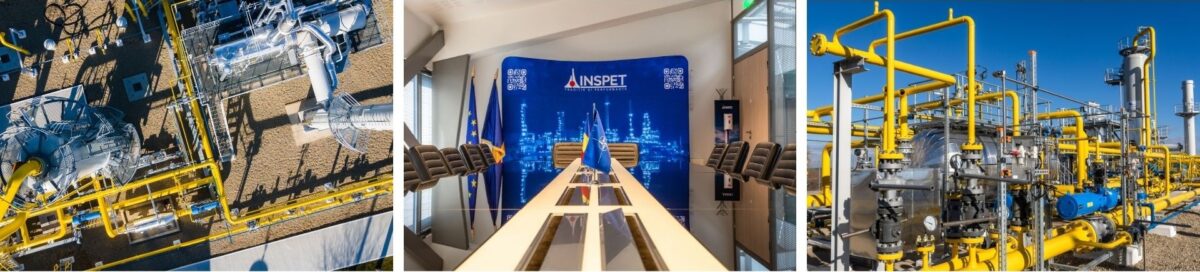
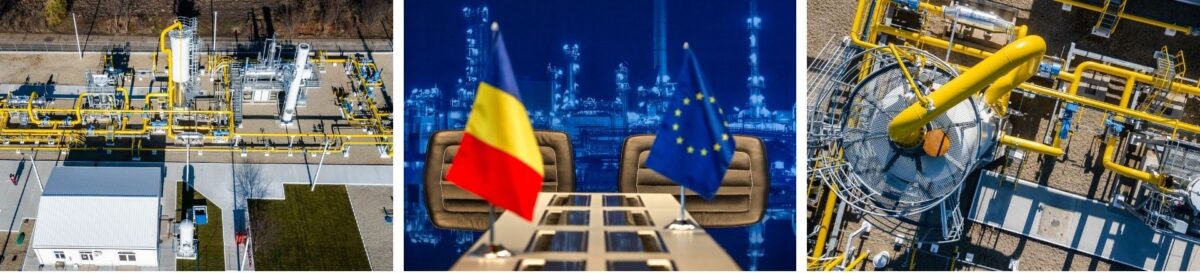
What Remains Invisible Is Often What Matters Most
When discussing underground natural gas storage, we tend to think almost exclusively about the geological formations where natural gas is stored. In reality, these underground reservoirs represent only one part of a much more complex system.
The performance and reliability of an underground storage facility depend on an extensive network of above-ground infrastructure, including injection and withdrawal wells, gathering pipelines, gas separation units, gas dehydration facilities, compressor stations, metering and pressure regulation stations, SCADA systems, automation solutions, electrical power supply systems, and safety and security infrastructure.
From the perspective of a company like INSPET, it is precisely this surface infrastructure that transforms a geological reservoir into a fully operational energy asset. Without process facilities, compression systems, and the associated technological infrastructure, the geological storage capacity of a reservoir cannot be effectively utilized.
In recent years, investments have focused not only on expanding storage capacity but also on modernizing existing facilities, increasing injection and withdrawal rates, digitalizing operations, and integrating advanced monitoring and control technologies.
Today’s Infrastructure Is Building Tomorrow’s Energy System
Perhaps the most significant transformation is that infrastructure originally developed for natural gas is now being re-evaluated in the context of emerging energy technologies.
Across Europe, pilot projects are already exploring the use of underground geological formations for hydrogen storage, while the expertise gained through the development and operation of underground natural gas storage facilities is increasingly being applied to Carbon Capture and Storage (CCS) projects. At the same time, the concept of Dual-Use Infrastructure is gaining momentum, with energy infrastructure being designed to meet not only commercial and industrial needs but also broader resilience and security requirements.
This evolution creates significant opportunities for Romania’s engineering and construction industry. Modernizing existing infrastructure and developing new strategic projects require advanced engineering, process facilities, transmission pipelines, compressor stations, electrical systems, and automation solutions—areas in which experienced Romanian companies can play an increasingly important role.
More Than Energy Infrastructure
Looking ahead, it is becoming increasingly clear that countries will no longer compete solely on the basis of their natural resources. Their competitiveness will increasingly depend on the quality of the infrastructure that enables those resources to be transported, processed, stored, and delivered efficiently and securely.
From this perspective, Romania starts from a position of genuine strength. The country benefits from domestic natural gas production, major offshore developments in the Black Sea, an extensive gas transmission network, and one of the largest underground natural gas storage infrastructures in Central and South-Eastern Europe. If these strategic advantages continue to be supported through sustained investment and the development of engineering expertise, Romania can further strengthen its position as a regional leader in energy infrastructure.
At INSPET, we witness this transformation through every project we deliver. We believe the future of energy will not be defined solely by the resources countries possess, but by the infrastructure that connects them, protects them, and ensures they are available wherever they are needed. In this evolving landscape, underground natural gas storage facilities will undoubtedly remain one of the most valuable—and often least visible—components of Europe’s critical energy infrastructure.
***
This article expands on the topic of energy infrastructure by providing an analysis of market developments and the opportunities Romania has in the context of the ongoing transformation of the European energy sector. The full interview with Mr. Ciprian Păltineanu, CEO of INSPET, is available in Business Catalog:
https://businesscatalog.ro/interviu-ciprian-emanuel-paltineanu-inspet-infrastructura-energetica/

INSPET is a Romanian company with over 75 years of technical tradition, positioned as an Energy Infrastructure Integrator (EPCC), specializing in strategic energy projects and in the development of integrated systems for the transport and processing of natural gas, crude oil, and water, including main pipelines, technological installations, and highly complex industrial energy facilities.
Become part of the INSPET community and explore the projects, values and people that define our work and our long-term contribution to energy and critical infrastructure.
Follow us on our official channels: LinkedIn, Facebook, YouTube and on the company website, www.inspet.ro.
