

Romania is approaching an important moment for the regional natural gas market. Offshore production is advancing, investment is increasing, and security of supply remains at the heart of the European agenda. In this context, the availability of natural resources represents only one part of the equation. Romania’s ability to unlock this potential will depend on the infrastructure connecting production, transmission and storage, as well as on the predictability required for long-term investment.
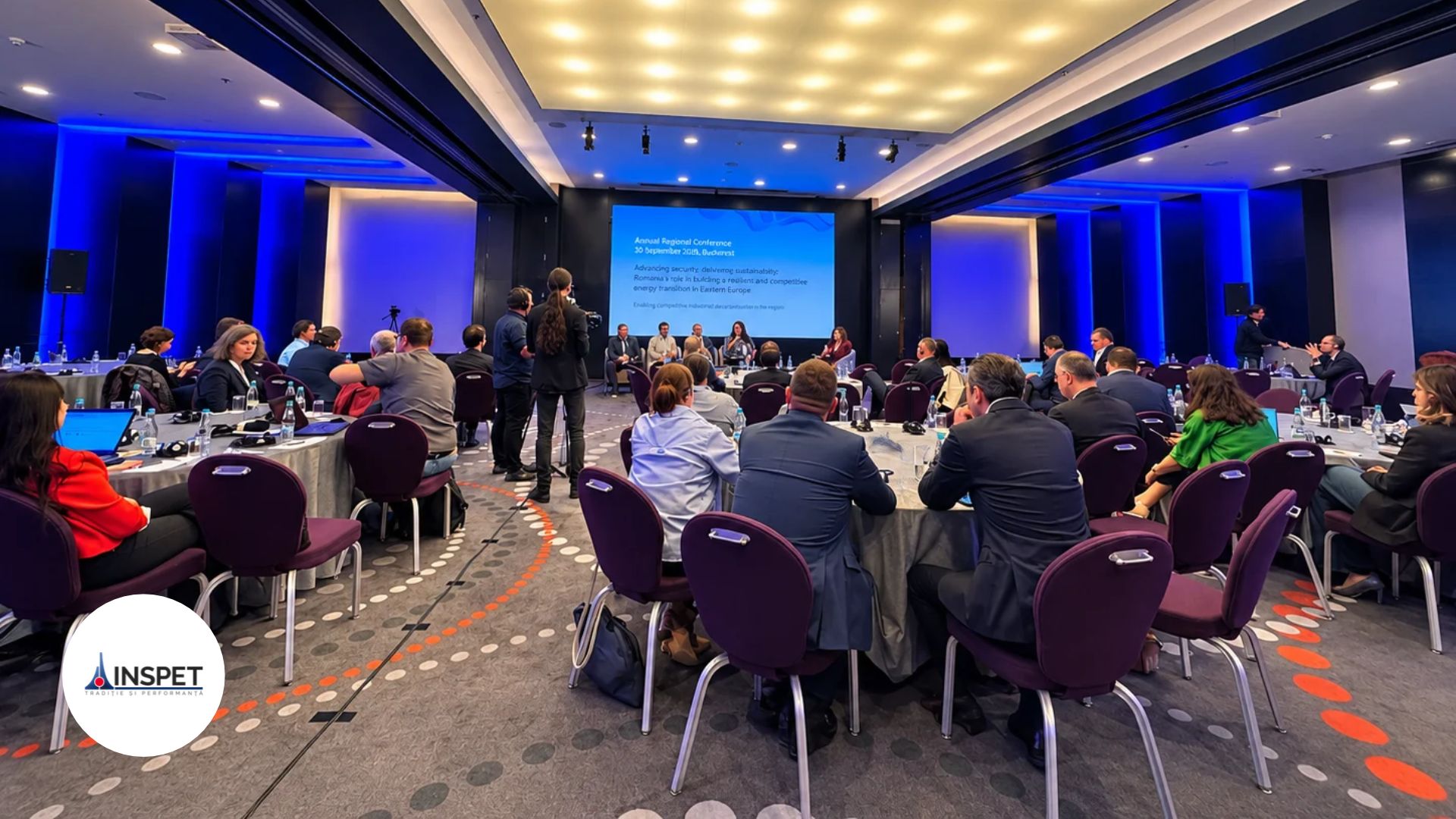
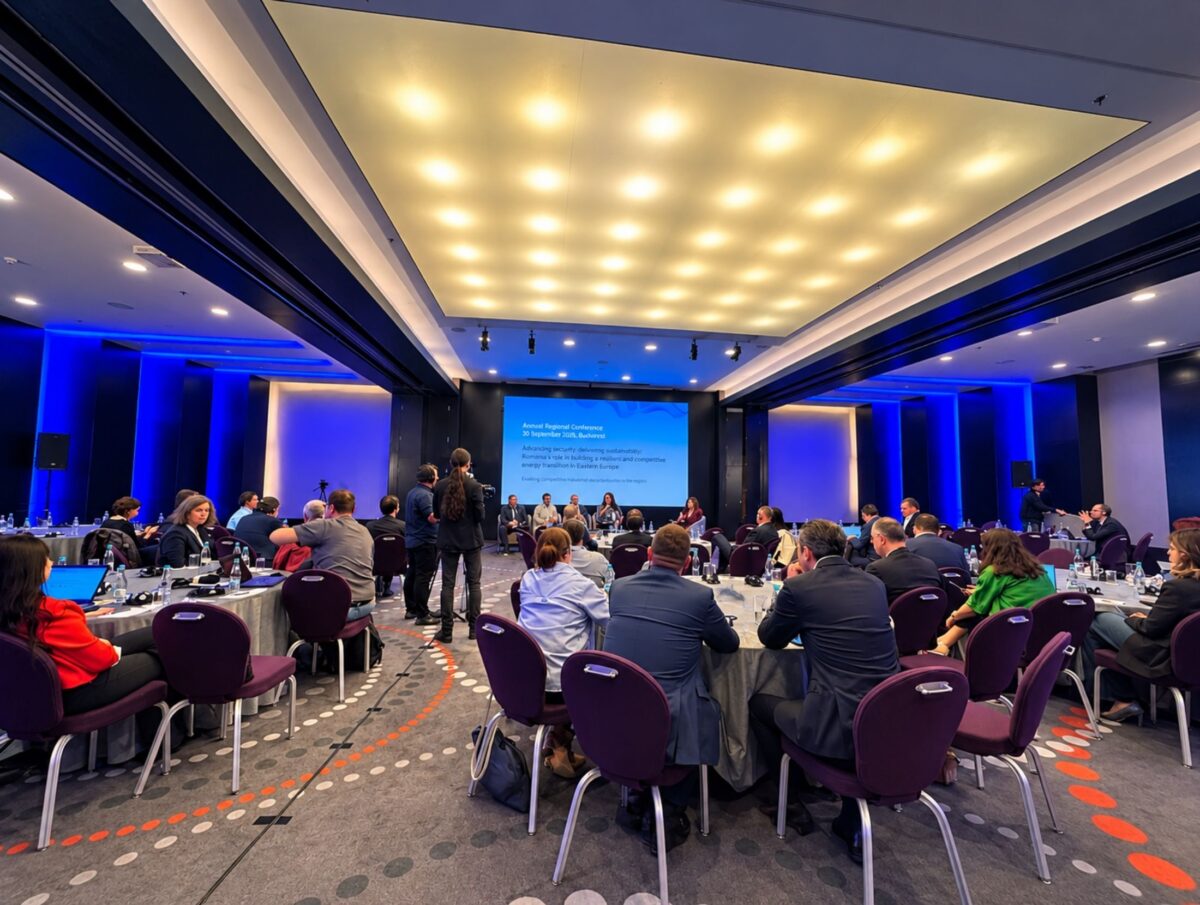
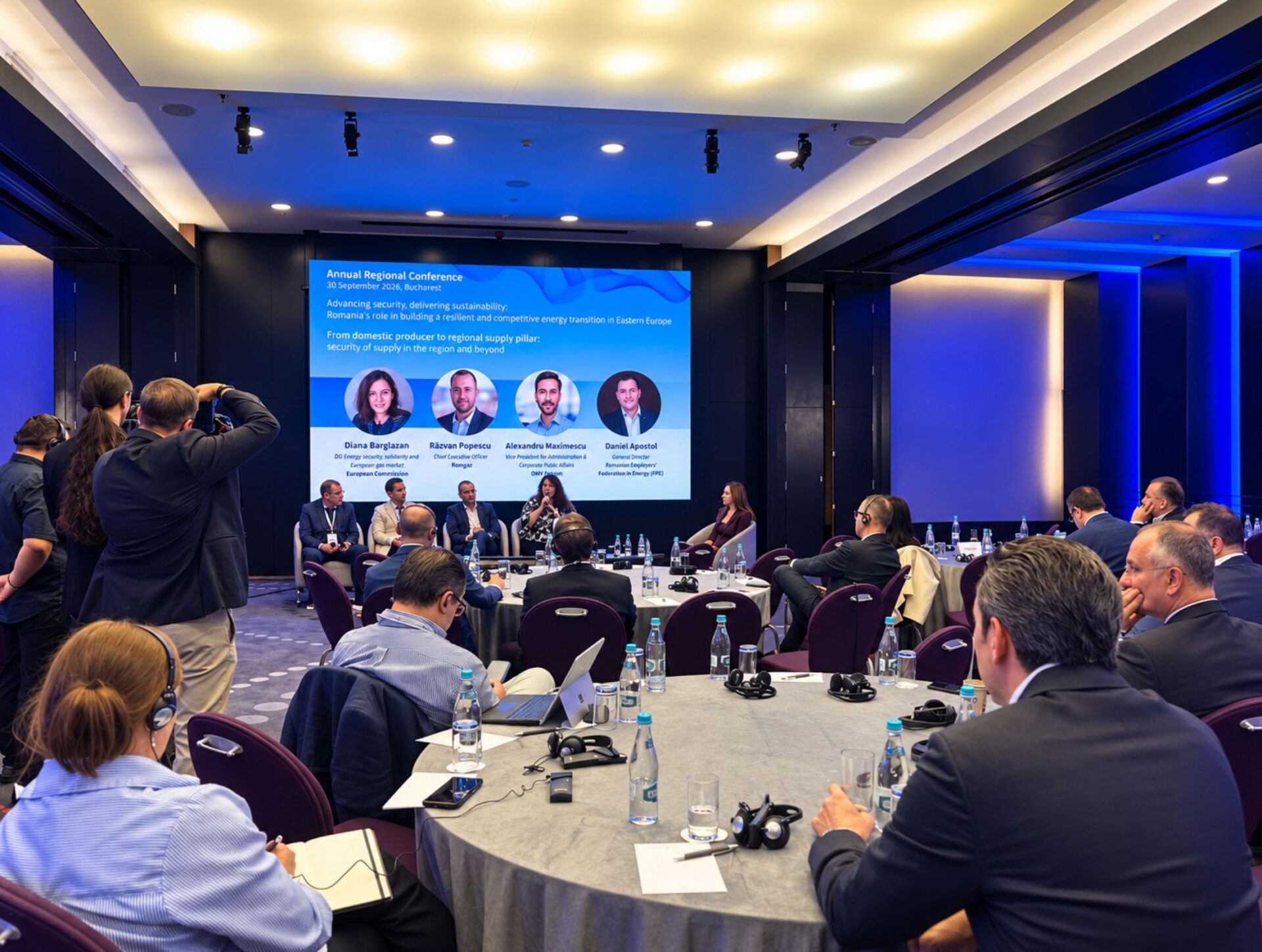
At the Eurogas Annual Regional Conference 2026, held in Bucharest on 30 September and organised by Eurogas in cooperation with the Romanian Energy Employers Federation (FPE), discussions brought together key topics such as security of supply, industrial competitiveness, domestic gas production and the energy transition.
The conference theme, “Advancing security, delivering sustainability: Romania’s role in building a resilient and competitive energy transition in Eastern Europe”, placed particular emphasis on the role Romania could play in the energy architecture of Central and Eastern Europe. From INSPET’s perspective, this raises an essential question: what needs to happen at infrastructure level for Romania to transform its energy potential into a long-term economic advantage?
The discussions brought together complementary perspectives from European institutions, energy companies and industry organisations. The first panel, dedicated to security of supply and Romania’s evolution from a domestic producer towards a potential regional energy pillar, brought together Diana Barglazan, DG Energy Country Coordinator for Romania – European Commission; Răzvan Popescu, CEO of Romgaz; Alexandru Maximescu, Vice-President Regulatory & Corporate Public Affairs – OMV Petrom; and Daniel Apostol, Director General of FPE.
The second panel, focused on the competitive decarbonisation of industry, brought together Adrian Porfir, CCUS Program Director – Holcim Romania; Michał Tarka, Founder and Director General – Polish Biomethane Organization; Oana Ijdelea, Board Member – Black Sea Oil & Gas; Raluca Alexandra Covrig, Director of Public Affairs & Communication – FPE; and Florea Leonard Costel, Regulatory Expert – ANRE.
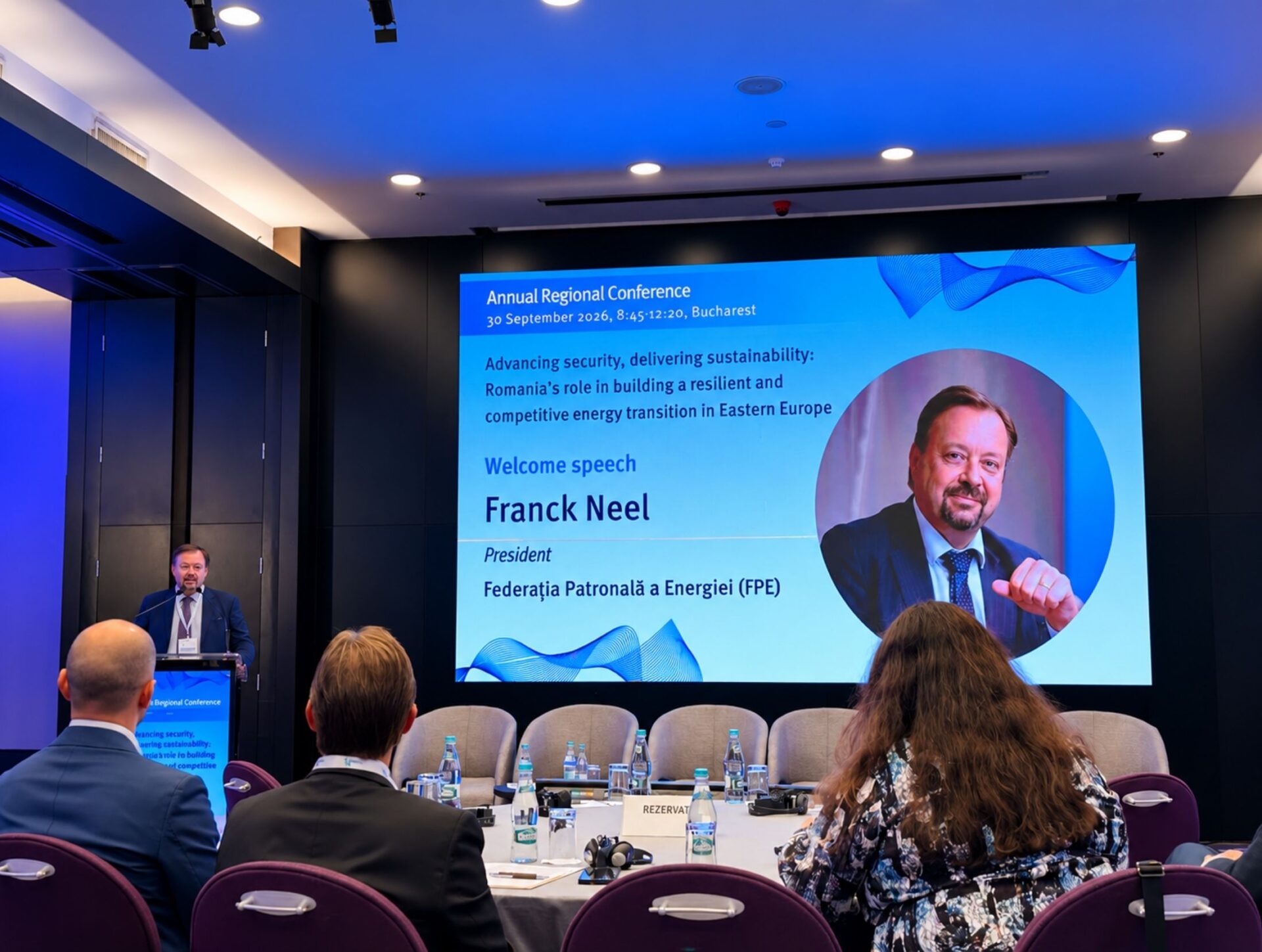
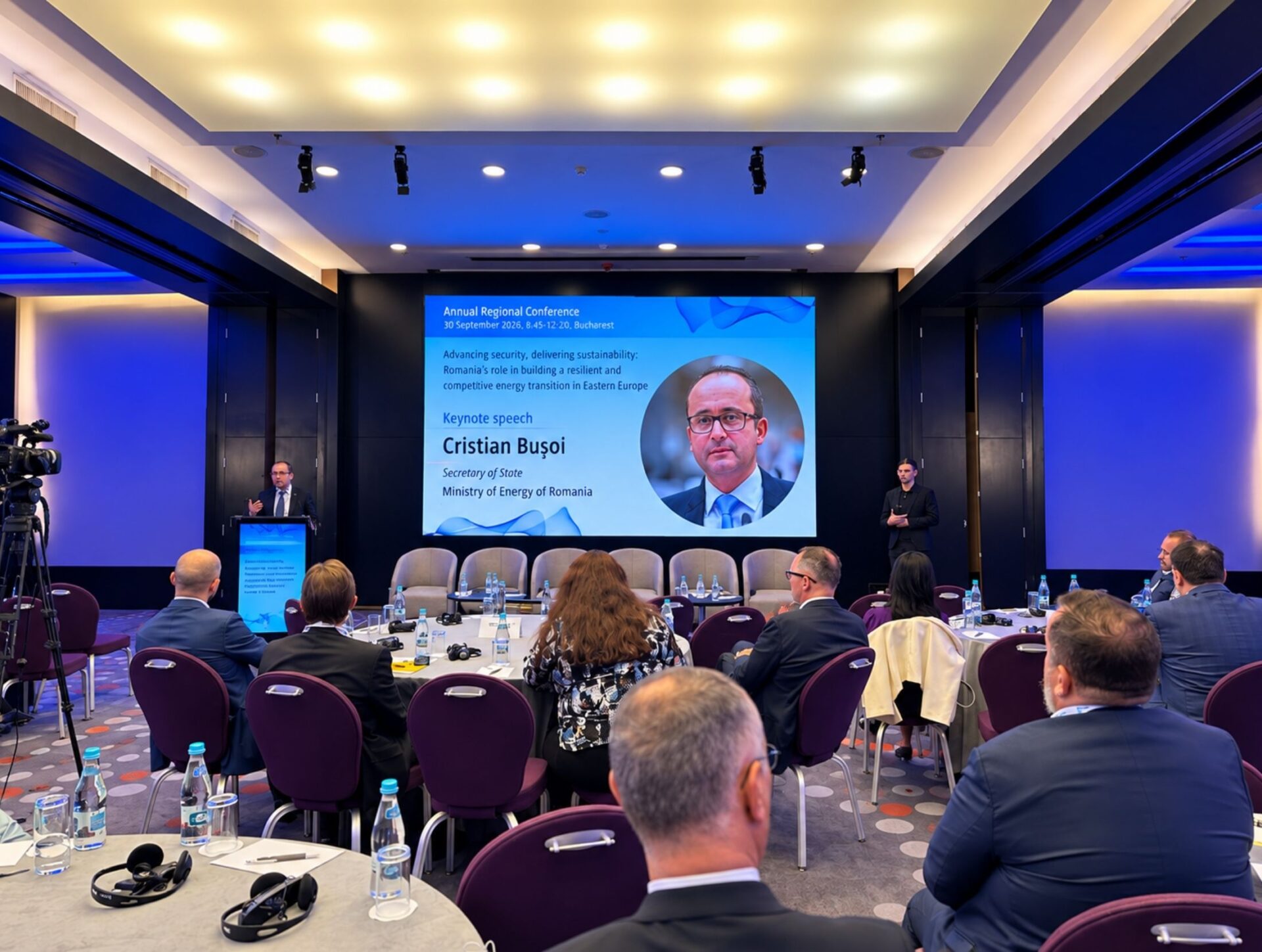
Ahead of the panels, the conference also featured contributions from Cristian Signoretto, President of Eurogas; Franck Neel, President of FPE; Cristian Bușoi, Secretary of State at the Romanian Ministry of Energy; and Dennis Hesseling, Head of the Gas and Coal Markets Division at the International Energy Agency (IEA), who presented a regional perspective on the gas market.


From resources to the capacity to unlock their value. Romania energy infrastructure.
The coming years could significantly reshape Romania’s position in the regional natural gas market. The most visible project is Neptun Deep. OMV Petrom and Romgaz have announced that first gas is expected in the first half of 2027, with plateau production expected to be reached by the end of the third quarter. At plateau, annual production is estimated at approximately 8 billion cubic metres, in the context of a total investment of around EUR 4 billion.
The scale of the project becomes even more relevant when considering the infrastructure required to bring offshore resources into the National Gas Transmission System. The offshore pipeline is approximately 160 km long, while work on the pipeline, subsea equipment and production platform progressed throughout 2026.
Neptun Deep, however, is not the only indicator of the new investment cycle. OMV Petrom announced investments of approximately RON 9 billion for 2026, 23% above the 2025 level, with around 60% of the budget allocated to the Exploration & Production segment. Onshore investment is also continuing.
The Spineni discovery in Olt County, announced in 2025, indicated through testing a potential production level of approximately 180,000 cubic metres of gas per day, following investments of around EUR 15 million in exploration.
Taken together, these developments move the discussion beyond the size of the available resources. The question becomes: how prepared is the energy system to receive, transport, store and make effective use of these new volumes?
Infrastructure must evolve alongside production
Increasing production must be supported by the infrastructure needed to deliver gas where it is required: pipelines, compressor stations, interconnections, storage facilities, metering and monitoring systems, as well as the infrastructure required for safe operations. In this context, production, transmission and storage must be viewed as parts of the same system.
The importance of storage is also reflected in the regulatory framework, with ANRE setting obligations for minimum natural gas stocks in underground storage facilities for the 2026 cycle. As domestic production increases, however, the role of storage extends beyond maintaining a seasonal reserve.
Storage capacity provides flexibility to the system, helps manage demand peaks and strengthens the market’s ability to respond to imbalances or supply disruptions.
Predictability – a prerequisite for long-term investment
Energy infrastructure has a lifespan measured in decades. A pipeline, compressor station, gas storage facility or infrastructure associated with offshore production involves engineering, permitting, procurement, construction, testing and commissioning, followed by many years of operation.
For this reason, predictability is not merely a fiscal or legislative issue. It is an economic prerequisite for investment.
OMV Petrom has also emphasised, including in its presentation of the 2025 results, the importance of a stable fiscal and regulatory framework in supporting major investment programmes.
For the industry as a whole, a stable operating framework enables realistic planning of costs and financing, resource contracting, supply-chain organisation and the maintenance of execution capacity and a specialised workforce. The more complex the projects and the longer their operating life, the more important this visibility becomes.
Romania energy infrastructure becomes economic infrastructure
The discussion therefore extends beyond the boundaries of the energy sector. Access to secure and competitive energy affects production costs, investment decisions and the competitiveness of the economy as a whole.
It is no coincidence that the Eurogas conference agenda connected security of supply with energy affordability, industrial competitiveness and the energy transition.
For Romania, increasing domestic production can strengthen energy security and create the conditions for a more significant regional role. But the existence of resources alone is not enough to achieve this outcome. Infrastructure capable of connecting production with domestic demand, storage capacity and regional markets is essential.
At the same time, the infrastructure being built today will operate within an energy system that will change considerably over the coming decades. Biomethane, hydrogen and other low-carbon technologies will place new demands on both existing and future infrastructure. The potential of biomethane and the development of renewable and low-carbon gases were also included on the agenda of the Eurogas conference in Bucharest.
As a result, flexibility, digitalisation, monitoring and the ability to accommodate new technologies are becoming increasingly important characteristics of modern energy infrastructure.
INSPET’s perspective: infrastructure as a system
For INSPET, the idea that production, transmission, compression and interconnection should be viewed as parts of the same system is not merely a perspective on market development. It is also supported by the company’s experience in delivering energy infrastructure projects in Romania.
One relevant example is BRUA, one of the strategic projects developed to strengthen Romania’s National Gas Transmission System and regional connectivity. Phase I of the project included approximately 479 km of pipeline between Podișor and Recaș, as well as three compressor stations – Podișor, Bibești and Jupa – designed to enable bidirectional gas flows.
INSPET was the leader of the consortium that delivered Lot 1 of the pipeline, participated in the execution of Lot 2, and led the consortium contracted for the works related to the three compressor stations.
From today’s market perspective, BRUA is relevant not only as a completed project, but also as an example of how infrastructure developed during one investment cycle can become essential at a later stage. Phase I was developed to provide transmission capacities of 1.75 billion m³/year towards Hungary and 1.5 billion m³/year towards Bulgaria.
These figures take on a new dimension in the context of Neptun Deep, which is expected to deliver approximately 8 billion m³ of natural gas annually once plateau production is reached. Comparing these volumes illustrates the scale of the new phase the Romanian gas market is entering and the pressure that additional volumes may place on the system’s capacity to receive and make effective use of them.
The same logic can be seen in the Romania–Bulgaria Giurgiu–Ruse interconnector, where INSPET led the consortium responsible for the works related to the back-up pipeline crossing beneath the Danube. Upon completion of the works, Transgaz noted that the interconnection contributed to enabling gas transmission between Romania and Bulgaria and to the integration of the regional transmission corridor.
It is a relevant example for a market in which energy security increasingly depends not only on the resources available nationally, but also on the physical capacity to move gas between markets.
In this context, INSPET’s experience in pipeline projects, compressor stations and interconnection infrastructure aligns with one of the key directions of the market in the years ahead. If Neptun Deep and the development of onshore production bring additional volumes into the system, infrastructure must be able to address a more complex equation: receiving the gas, transporting it, managing flows, storing it and connecting it with regional markets.
Therefore, the next investment cycle should not be viewed exclusively through the lens of building new infrastructure. Equally important will be the modernisation and adaptation of existing infrastructure, increased operational flexibility, digitalisation and the integration of projects into a system capable of responding to different energy flows and scenarios.
For INSPET, this is the relevant market perspective: energy infrastructure is not a succession of independent projects, but a network in which each investment increases the value and usefulness of the others.
Romania today has both resources and strategic infrastructure developed during previous investment cycles. The next stage is to connect them within a system capable of transforming increased production into security of supply, economic competitiveness and regional relevance.

Since 1950, INSPET has been delivering EPCC (Engineering, Procurement, Construction & Commissioning) projects for the energy and industrial sectors in Romania and international markets. The company’s expertise covers the entire project lifecycle – from engineering and design to construction, commissioning, modernization, and maintenance – for pipelines, industrial facilities, and critical infrastructure serving the oil and gas, energy, water, and emerging clean energy sectors.
Through continuous investment in people, technology, and innovation, INSPET contributes to the development of safe, reliable, and sustainable infrastructure tailored to the evolving needs of today’s industry. The company is a member of several prestigious national and international business and professional organizations, including Prahova Chamber of Commerce and Industry, Chamber of Commerce and Industry of Romania, American Chamber of Commerce in Romania (AmCham Romania), French Chamber of Commerce, Industry and Agriculture in Romania (CCIFER), Polish-Romanian Bilateral Chamber of Commerce and Industry, Romania-Ukraine Bilateral Chamber of Commerce, PSC – Employers’ Association of Construction Companies, European Clean Hydrogen Alliance, ARACO – Romanian Association of Construction Contractors, Romanian Water Association and other professional organizations.
Become part of the INSPET community and explore the projects, values and people that define our work and our long-term contribution to energy and critical infrastructure.
Follow us on our official channels: LinkedIn, Facebook, YouTube and on the company website, www.inspet.ro.
