


A complex, essential—yet often invisible—infrastructure underpins the stable operation of the energy system: underground gas storage facilities. These are vital for balancing demand during peak periods and for safeguarding energy supply
In recent years, underground gas storage systems (UGS) have become a central pillar of Europe’s energy security. Storage capacity influences both the management of seasonal demand fluctuations and the resilience of countries in the face of geopolitical crises or supply disruptions.
At the European level, countries such as Germany, Italy, and France have extensive storage capacities, while Romania is undergoing a rapid development process, aiming to significantly increase its capacity and strengthen its role as a regional energy hub. In this context, expanding storage infrastructure is no longer just a technical investment, but a strategic direction.
- Germany holds one of the largest capacities in Europe (~24–25 billion m³)
- Italy exceeds 17 billion m³
- France ~13 billion m³
- Romania has a capacity of approximately 3 billion m³, with expansion plans
In certain countries such as Austria or Latvia, storage capacity can exceed annual consumption, giving them a major strategic advantage in the region. In this context, the development of UGS infrastructure is no longer merely a technical investment, but a geopolitical and economic priority.
What does the construction of a gas storage facility involve
The construction of an underground gas storage facility is an extremely complex process, involving:
- underground infrastructure (caverns, depleted reservoirs, or salt formations)
- surface installations for gas compression and treatment
- dehydration and regulation stations
- measurement and control systems
- connection networks to the national transmission system
These facilities must comply with strict safety and performance standards, as they operate under high pressure and in critical conditions.
Bilciurești – a benchmark of energy infrastructure in Romania
A relevant example of INSPET’s expertise in gas storage is the project carried out at Bilciurești, the largest gas storage facility in Romania and one of the most significant in Europe, ranked among the Top 30. With an active capacity of approximately 1,310 million standard cubic meters and a maximum operating pressure of 45 bar, it plays a crucial role in supplying the national energy system, being able to cover up to 20% of the country’s daily natural gas demand during winter and approximately 44% of the total storage volume.
Within this strategic objective, INSPET executed the Natural Gas Dehydration Station – Group 145 for ROMGAZ – DEPOGAZ, an EPCC project in which the company acted as general contractor, covering all stages—from equipment procurement to execution, testing, and commissioning. The main objective of the project was to increase storage capacity and, implicitly, gas withdrawal capacity.
The company’s experience is not limited to this project. INSPET has consistently delivered natural gas dehydration installations and modernization works in locations such as Ghercești, Finta, Bălăceanca, Caragele, and Fierbinți, actively contributing since 2005 to the development of Romania’s storage infrastructure. At the same time, the company has executed complex installations for underground gas storage and compression units for depleted gas fields, supporting efficient resource utilization and the expansion of storage capacities.
“Gas storage facilities are not just strategic reserves, but active mechanisms that support the balance of the entire energy system.”
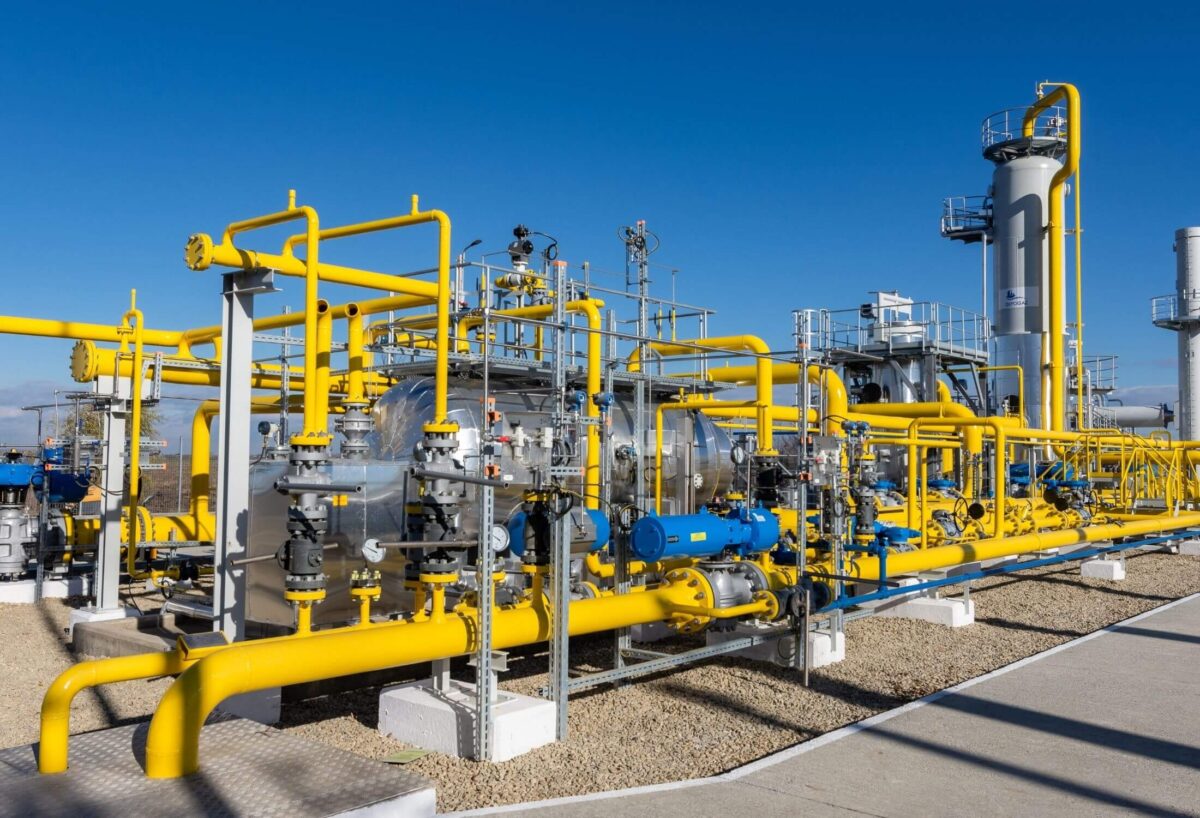
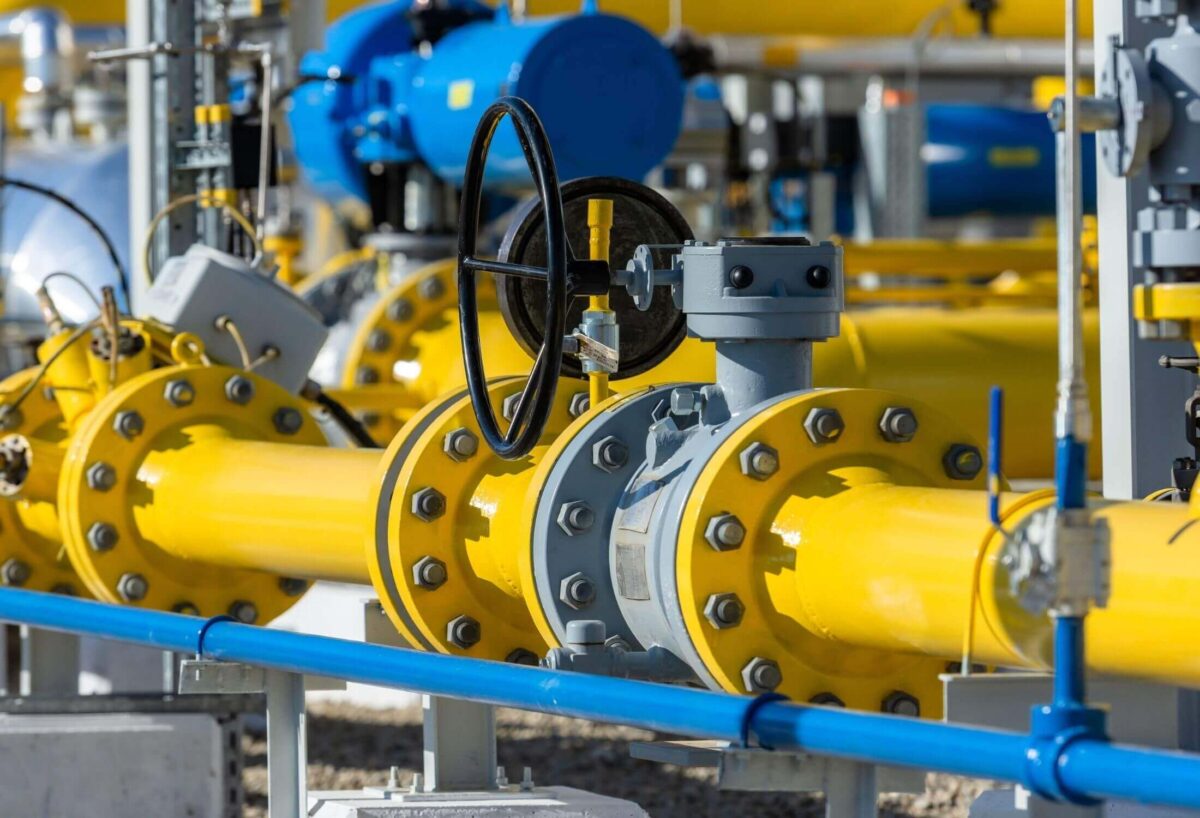

Natural gas dehydration station – technology and performance
Within a dehydration station, natural gas passes through a TEG (triethylene glycol) absorption column, a process that removes moisture and ensures compliance with quality requirements for transport and consumption. The technical parameters are highly stringent: water dew point of maximum -15°C, hydrocarbon dew point of maximum 0°C, and a maximum gas temperature of +50°C.
Through these processes, the delivered gas meets regulatory standards and is safe for use, contributing to the efficient operation of the entire energy system. The completion of this installation had a major impact, tripling the facility’s capacity and increasing daily withdrawal capacity by over 5 million standard cubic meters.
“Performance is not measured only in capacity, but in how well an installation meets the real needs of the energy system. Gas storage facilities involve far more than underground infrastructure. The essential component is represented by surface technological installations, which enable gas compression, treatment, impurity removal, and control of injection and withdrawal flows. INSPET has extensive experience in delivering such complex installations, including gas compression units, dehydration stations, desulfurization installations, and integrated technological systems for energy infrastructure.”
Butimanu – infrastructure modernization for increased storage capacity
Alongside the development of the Bilciurești facility, the works carried out by INSPET at the Butimanu gas compression station directly contribute to increasing storage capacity and improving overall system efficiency. Projects here include the systematization and rehabilitation of suction and discharge manifolds, modernization of existing installations, and mechanical, electrical, and automation interconnection between system components.
“Behind every critical infrastructure project stand people, coordination, and a real responsibility for the functioning of the energy system.”
The complexity of gas storage infrastructure
As mentioned earlier, for natural gas to be delivered into the National Transmission System and reach end consumers, it must meet strict quality requirements. In this regard, gas dehydration stations play an essential role, ensuring moisture removal and maintaining optimal operating parameters for the entire system.
“In energy infrastructure, gas quality is not a technical detail, but an essential condition for the safety and operation of the entire system.”
Gas storage facilities are highly complex systems that include not only underground components but also a wide range of surface technological installations: compression stations, dehydration units, measurement and control systems, and pipeline networks. Integrating these systems requires advanced engineering expertise, rigorous planning, and strict adherence to safety and quality standards.
“In energy infrastructure, every detail matters, and safety and predictability are not optional—they are mandatory.”
INSPET – strong expertise in gas storage infrastructure
With origins dating back to 1950, INSPET brings over 75 years of proven expertise in energy infrastructure, reflected in more than 350 complex projects and over 4,000 km of pipelines executed. The company focuses on strategic energy and critical infrastructure projects, partnering with leading operators in the gas and oil industries.
Its portfolio covers the full spectrum of energy infrastructure: transmission pipelines, compression stations, dehydration units, processing installations, and gas storage infrastructure.
This experience is complemented by the ability to deliver integrated EPCC projects (engineering, procurement, construction & commissioning), ensuring efficient management of complex works and compliance with international technical standards.
Why experience in UGS projects matters
In energy infrastructure, practical experience is essential. Gas storage projects involve:
- high technical risks
- strict safety requirements
- integration of multiple technological systems
A contractor must demonstrate:
- a relevant portfolio
- EPCC capabilities
- operational discipline
- execution predictability
INSPET meets these requirements through over 75 years of experience, strong engineering expertise, and an organizational culture focused on quality and safety in gas transmission systems.
Its portfolio includes projects delivered for strategic companies such as Transgaz, Romgaz, OMV Petrom, Engie, and Delgaz Grid, confirming its ability to deliver high-standard projects safely and predictably.
Through this experience, INSPET is a relevant partner for international energy infrastructure projects, cross-border partnerships, reconstruction of critical infrastructure, and major investments in the energy sector.

Become part of the INSPET community and explore the projects, values and people that define our work and our long-term contribution to energy and critical infrastructure.
Follow us on our official channels: LinkedIn, Facebook, YouTube and on the company website, www.inspet.ro.
