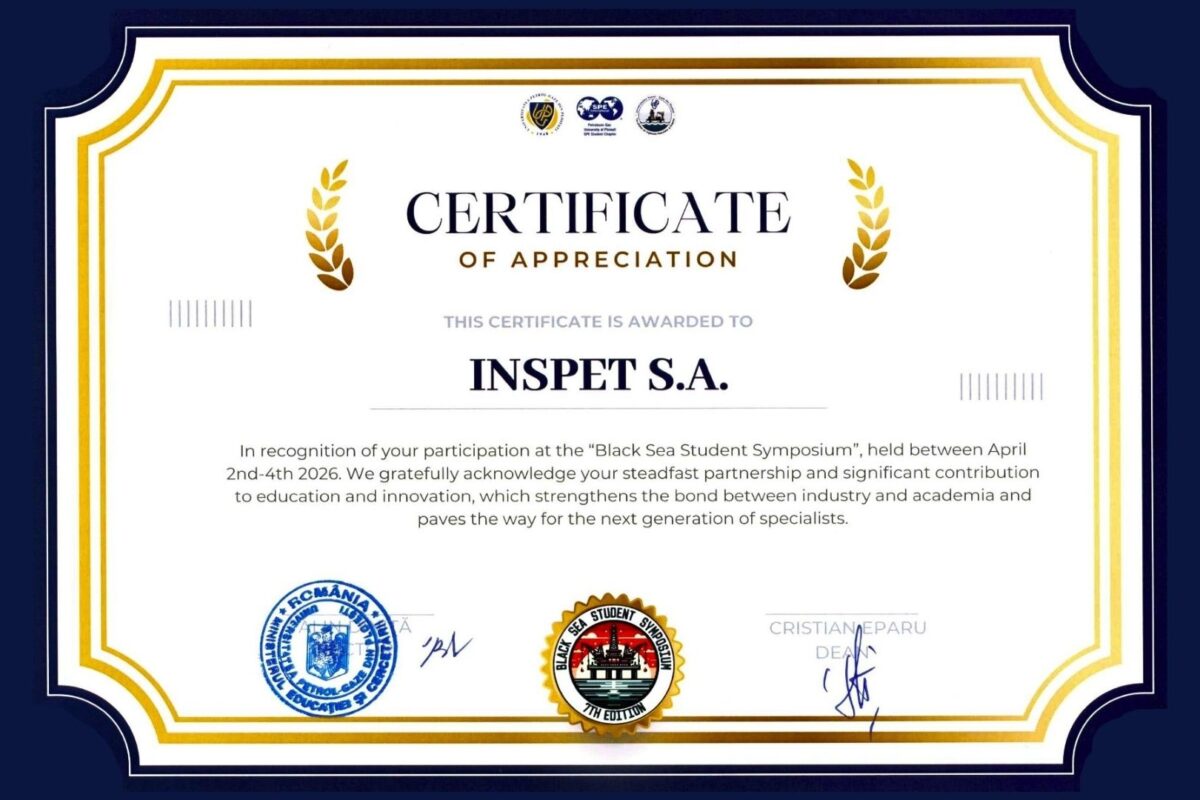
In a sector where the demand for engineers continues to outpace supply, and oil and gas graduates integrate quickly into the industry, the connection between academia and companies is becoming increasingly important. The Black Sea Student Summit 2026, organized by the Petroleum-Gas University of Ploiești, once again brought together representatives from both academia and industry. INSPET was present at the event, continuing its consistent involvement in a space where dialogue with future engineers truly matters.
At our dedicated stand, conversations developed naturally. Students were keen to understand how energy fluid infrastructure projects actually unfold beyond theory. Their questions focused on practical aspects—execution, site organization, and responsibilities—reflecting a more applied and realistic perspective on the field.


The Petroleum-Gas University of Ploiești remains one of the most important technical education centers in Romania. With over 4,000 students enrolled each year and hundreds of graduates in fields such as oil and gas engineering, hydrocarbon transport and storage, and technological installations, the university plays a direct role in shaping the workforce of the energy sector. Specializations related to oil and gas alone attract several hundred students annually, maintaining a solid foundation for the future of the industry.
Prahova County continues to be one of the most dynamic industrial areas in Romania, with a strong tradition in oil and gas, refining, and industrial construction—an environment in which we operate on a daily basis. There is a constant demand for specialists, whether engineers, designers, or essential field roles such as welders, mechanics, and electricians. At the same time, graduates in these fields tend to integrate quickly into the labor market, especially when they also have practical experience. For us, this context highlights how important a strong connection between academia and industry truly is, and how early exposure to construction sites and real projects makes a meaningful difference in their professional development.
Beyond events, the relationship with the academic environment is built over time, including through internship programs. Each year, students from UPG join the INSPET West Platform, where they have the opportunity to observe firsthand how different stages of energy infrastructure projects are carried out. Direct experience and interaction with the company’s engineers provide them with a realistic perspective on the profession. For many of them, this is their first exposure to a complex energy infrastructure project, where they begin to understand how theory connects with execution.

Welding is, in fact, one of the key processes in the construction of energy fluid transportation infrastructure. Every joint must be executed according to strict safety and quality standards, and understanding these details makes the difference between theory and the reality on site. Direct interaction with such processes helps students better understand the level of responsibility this field requires.
Experienced engineers and foremen play an essential role in this process, passing on not only technical knowledge but also the practical way of working in the field. On site, things are learned differently, and this direct interaction contributes to the development of professionals who understand both the technical aspects and the importance of operational discipline.
Behind every energy infrastructure project are well-prepared teams and processes that require careful coordination. Whether we are talking about transmission pipelines, gas compression stations, gas dehydration installations, or underground gas storage facilities, all of these require an integrated approach. For this reason, experience in projects delivered under the EPCC model—from engineering and procurement to construction and commissioning—is essential and increasingly relevant for students who want to understand how the industry operates at a real scale.